
How to Plan Your First Trip to Japan Without Feeling Overwhelmed
Planning your first trip to Japan can feel overwhelming.
You probably have a long list of places saved from Instagram, YouTube, TikTok, blogs, and Google Maps: Tokyo neighborhoods, Kyoto temples, ramen shops, anime locations, day trips, onsen towns, viewpoints, cafés, museums, and hidden gems.
The problem is not that Japan is difficult to visit. Japan is one of the best countries in the world for independent travelers. The real challenge is understanding what to do first, what to book in advance, how many cities to include, and how to build an itinerary that feels exciting without becoming exhausting.
This guide is designed for first-time visitors to Japan. I’ll walk you through the entire planning process step by step: when to go, how many days you need, where to stay, how to move around, what to book early, how to prepare your documents, and how to avoid the most common first-trip mistakes.
Disclosure: this article may contain affiliate links. If you buy through them, I may earn a small commission at no extra cost to you. I only recommend services that I believe are useful for travelers planning a trip to Japan.
Quick answer: how should you plan your first trip to Japan?
For a first trip to Japan, start by deciding how many days you have and which season you want to travel in. Then choose a simple route, usually Tokyo and Kyoto, with Osaka, Nara, Hiroshima, Kanazawa, Takayama, or Mount Fuji added only if you have enough time.
After that, book flights, choose hotels close to useful train stations, check whether you need a JR Pass or individual train tickets, arrange internet access, prepare your entry documents, and book only the attractions that really require advance reservations.
For most first-time visitors, 10 to 14 days is the best balance. It gives you enough time to experience Japan without turning every day into a rushed checklist.
First trip to Japan planning checklist
Before going into the details, here is a simple planning timeline you can use as a starting point.
| When | What to plan |
|---|---|
| 6–9 months before | Decide season, budget, trip length |
| 4–6 months before | Book flights, choose main cities |
| 3–4 months before | Book hotels |
| 2–3 months before | Plan trains, passes, eSIM, insurance |
| 1–2 months before | Book popular attractions |
| 1 week before | Documents, Visit Japan Web, offline maps, packing |
You do not need to plan every minute of your trip. In fact, you should not. But you do need a clear structure, especially if this is your first time in Japan.
A good Japan itinerary is not a list of everything you want to see. It is a realistic sequence of places that makes sense geographically, logistically, and emotionally.
1. How many days do you need for a first trip to Japan?
The first big question is not “Where should I go?” but “How many days do I actually have?”
Japan looks small on a map, but traveling between cities, checking in and out of hotels, navigating train stations, and recovering from jet lag all take time. This is why many first-time itineraries become too rushed: people add too many cities before understanding the rhythm of the trip.
Here is a realistic starting point.
| Trip lenght | Best for |
|---|---|
| 7 days | A short first taste: Tokyo and Kyoto, very selective |
| 10 days | Tokyo, Kyoto, and one extra base or day trip |
| 14 days | The best balance for most first-time visitors |
| 21 days | A deeper trip with Tokyo, Kyoto, Osaka, Hiroshima, Mount Fuji, the Japanese Alps, or Kyushu |
If you only have 7 days, do not try to see Tokyo, Kyoto, Osaka, Hiroshima, Mount Fuji, Nara, and Kanazawa. You will spend too much time moving and not enough time experiencing Japan.
If you have 10 days, you can build a very satisfying first trip: Tokyo, Kyoto, and either Osaka, Nara, or a Mount Fuji area stop.
If you have 14 days, you have enough time for a classic first-time route with more breathing room.
If you have 21 days, you can start adding more regional variety without making the trip feel like a race.
The most important rule is simple: you do not need to see everything on your first trip to Japan. You need to build a trip that actually works.
Read Also // 2-week Japan itinerar and 7-day Tokyo area itinerary
2. Choose the right season for your first Japan trip
Japan is beautiful all year, but the season will strongly affect your experience, your budget, your clothing, and your itinerary.
For first-time visitors, spring and autumn are usually the most popular choices.
Spring is famous for cherry blossoms. It is iconic, emotional, and beautiful, but also very busy and often more expensive. Cherry blossoms are also unpredictable: they depend on the weather and can bloom earlier or later than expected.
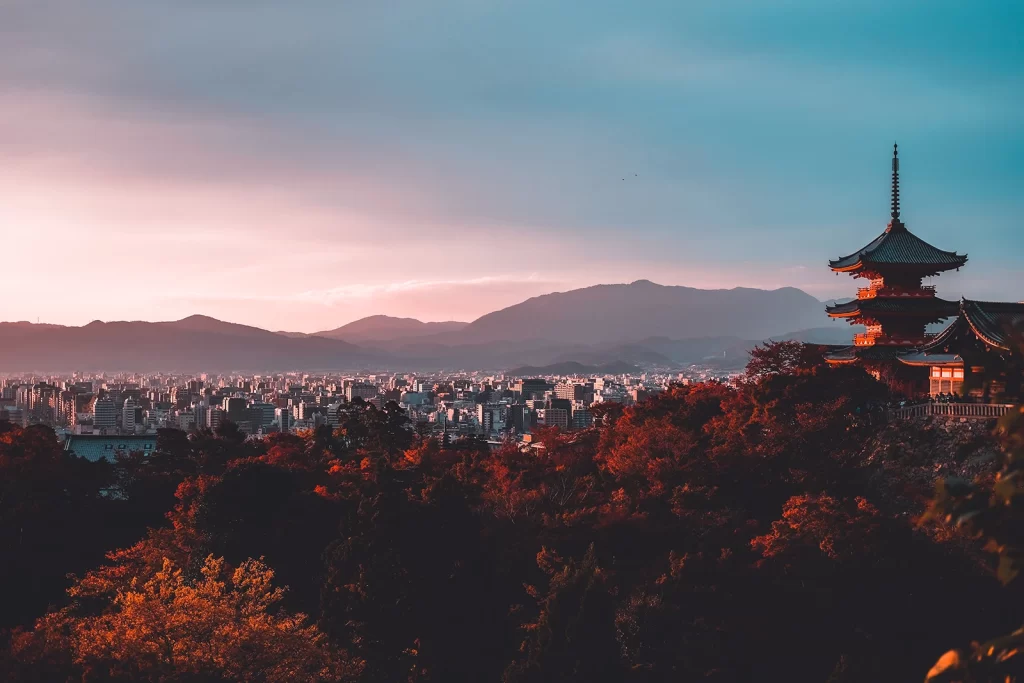
Autumn is probably the best overall season for a first trip. The weather is usually pleasant, the colors are stunning, and the atmosphere is less frantic than peak cherry blossom season.
Summer can be difficult because of heat and humidity, especially in cities like Tokyo, Kyoto, and Osaka. However, summer also has festivals, fireworks, green landscapes, and a very different energy. If summer is your only option, you can still have a great trip, but you should plan your days more carefully and avoid overloading the hottest hours.
Winter is underrated. It can be cold, but it is often easier to manage than summer. You can enjoy illuminations, hot springs, winter food, fewer crowds in some areas, and beautiful snowy landscapes if you include northern Japan or mountain regions.
Best season for first-timers: autumn
Most iconic season: cherry blossom
Most difficult season: summer
Best compromise: late May, early June, late November, early December
If you can choose freely, I would usually recommend autumn for a first trip to Japan. If cherry blossoms are your dream, spring is worth it, but book early and stay flexible.
Also read // Best Time to Visit Japan
3. Set a realistic first-trip budget
Japan can be more affordable than many people expect, but it is not a destination where you should plan blindly.
Your biggest costs will usually be:
- international flights;
- accommodation;
- long-distance transportation;
- food;
- activities and tickets;
- internet connection;
- travel insurance;
- shopping and souvenirs.
The good news is that Japan offers many options for different budgets. You can eat very well without spending much, use excellent public transportation, and find clean business hotels in convenient areas if you book early.
The bad news is that costs can rise quickly if you book late, travel during peak season, change cities too often, or choose hotels in very popular areas without comparing options.
For a first trip, I recommend thinking in terms of comfort and efficiency, not only the lowest possible price. A hotel that saves you €20 per night but adds 30 minutes of transport every morning may not be worth it. A poorly planned route can also cost more than expected because of extra trains, luggage transfers, taxis, or unnecessary hotel changes.
Before booking anything, create a simple budget with these categories:
| Category | Notes |
| Flights | Usually one of the biggest expenses |
| Hotels | Book early, especially in Tokyo, Kyoto, and Osaka |
| Transport | Shinkansen and long-distance trains can add up |
| Food | Flexible: convenience stores, ramen, sushi, izakaya, restaurants |
| Attractions | Some museums, viewpoints, theme parks, and experiences require tickets |
| Internet | eSIM, SIM card, or pocket Wi-Fi |
| Insurance | Strongly recommended |
| Extra buffer | Always keep money aside for unexpected changes |
A first trip to Japan does not need to be luxury, but it should be realistic. Underestimating the budget often creates stress during the trip.
Read also –> [The Real Cost of Traveling to Japan in 2026]
4. Build your route before booking hotels
This is one of the most important steps.
Many first-time visitors start by saving dozens of places and booking hotels too early. Then they realize their hotel is far from the areas they want to explore, or that their route forces them to change cities too often.
Do not start with hotels. Start with your route.
For a first trip, your main bases will usually be:
- Tokyo;
- Kyoto;
- Osaka;
- one optional extra area, depending on your number of days.
Tokyo is not just “one city stop.” It is huge, layered, and full of very different neighborhoods. You could spend a week in Tokyo and still have more to see.
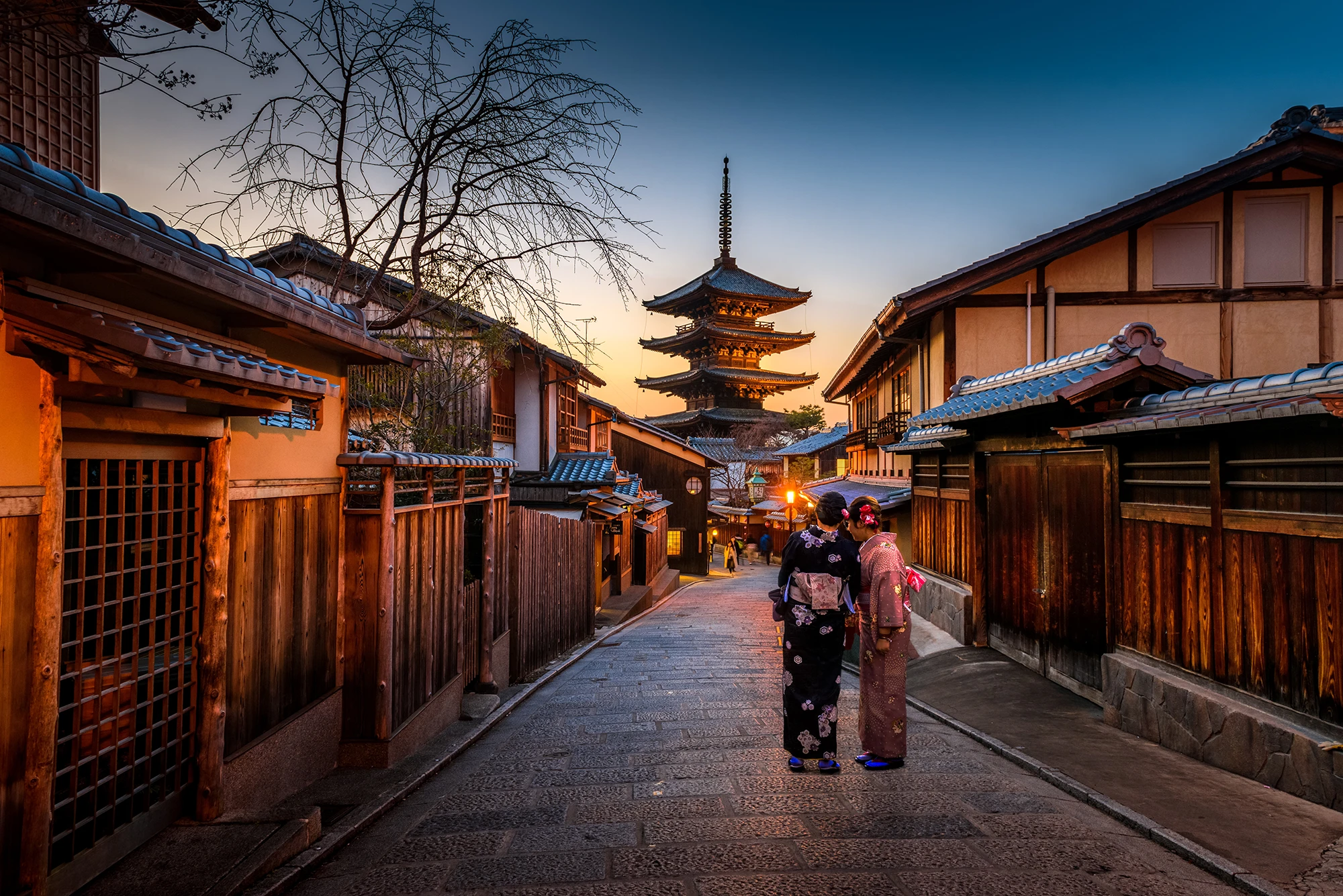
Kyoto is slower, more traditional, and more spread out than people expect. Temples, gardens, shrines, cafés, and historic districts are not all next to each other.
Osaka is great for food, nightlife, shopping, and as a convenient base for day trips, especially to Nara, Himeji, or Universal Studios Japan.
After these classic bases, you can add extra destinations only if they fit your trip length and travel style.
Good first-time additions include:
- Nara as a day trip;
- Hiroshima and Miyajima for history and scenery;
- Hakone or Kawaguchiko for Mount Fuji views;
- Kanazawa for gardens, samurai districts, and a more refined city experience;
- Takayama for a traditional mountain-town atmosphere;
- Nikko or Kamakura as day trips from Tokyo.
Simple first-time route examples
| Days | Route idea |
| 7 days | Tokyo + Kyoto |
| 10 days | Tokyo + Kyoto + Osaka or Nara |
| 14 days | Tokyo + Kyoto + Osaka + Hiroshima/Miyajima or Mount Fuji |
| 21 days | Tokyo + Fuji/Hakone + Kyoto + Osaka + Hiroshima + Kanazawa/Takayama |
The goal is not to create the “perfect” itinerary. The goal is to create a route that gives you variety without exhausting you.
A good first trip to Japan usually includes:
- modern city energy;
- traditional temples and shrines;
- food experiences;
- one or two day trips;
- some nature or scenic views;
- free time to explore without rushing.
Need help turning your ideas into a realistic Japan itinerary?
Planning Japan by yourself is possible, but it can become confusing very quickly when your saved places turn into an endless list of temples, neighborhoods, restaurants, day trips, hotels, train routes, and attraction tickets.
If you want to keep the freedom of an independent trip but avoid the stress of building everything from zero, I can help you create a realistic day-by-day Japan itinerary based on your travel dates, pace, interests, and budget.
You will still book your own flights and hotels, but you will have a clear plan that tells you where to go, how to move around, what to book in advance, and what to avoid.
5. Book your flights
Once you know your approximate season, number of days, and route, you can start looking for flights.
For most first-time trips, you will probably arrive in Tokyo, Osaka, or sometimes Nagoya. The two main Tokyo airports are Narita and Haneda. Haneda is closer to central Tokyo, while Narita is farther away but often has many international connections.
If your route starts in Tokyo and ends in Kyoto or Osaka, consider checking open-jaw flights: arriving in Tokyo and departing from Osaka, or the opposite. Sometimes this saves time because you do not need to return to your arrival city at the end of the trip.
When comparing flights, do not look only at the cheapest price. Also check:
- total travel time;
- number of layovers;
- arrival time in Japan;
- departure time from Japan;
- included luggage;
- cancellation or change conditions;
- airport transfer time after arrival.
Arriving in Japan late at night can be stressful for first-time visitors, especially after a long flight. If possible, choose a flight that gives you enough time to reach your hotel calmly.
✈️ Ready to check prices? Compare the best rates, layover times, and multi-city options for your Japan trip on Skyscanner.
6. Choose where to stay
Accommodation can make or break your first trip to Japan.
In Japan, location matters more than hotel size. You will walk a lot and use trains every day, so staying near a useful station is usually better than choosing a beautiful hotel in an inconvenient area.
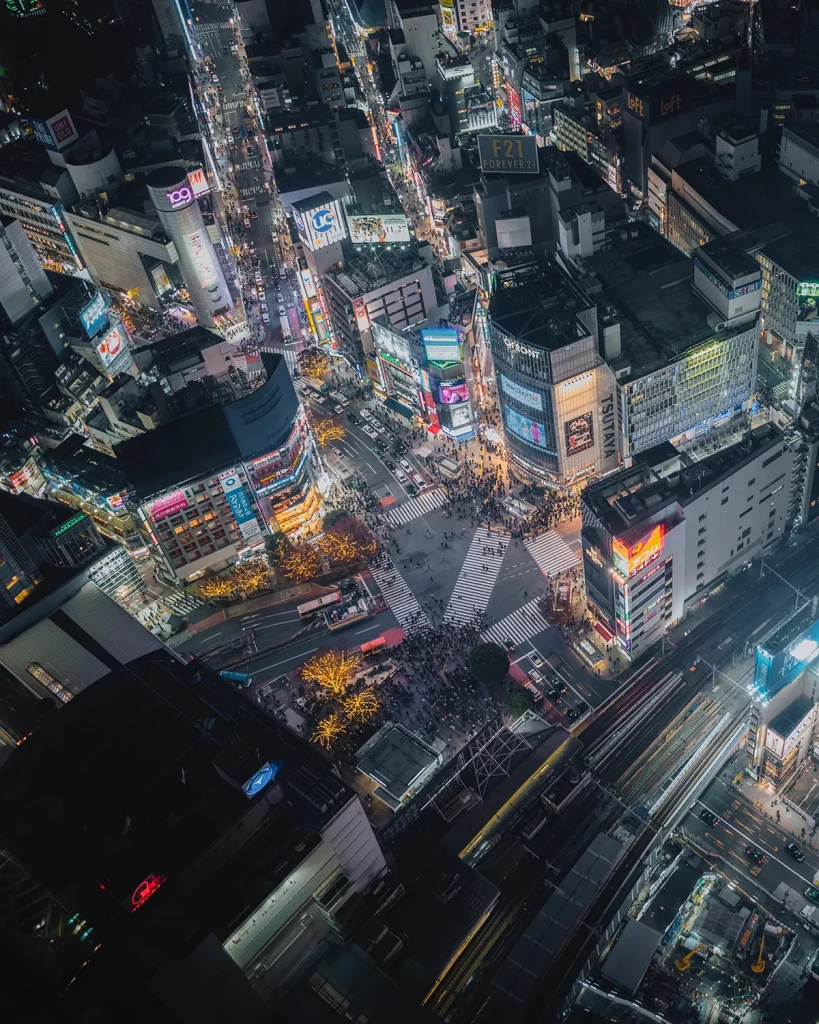
For your first trip, avoid hotels that look nice but are isolated. Also avoid changing hotel every two nights unless there is a very good reason. Every hotel change costs energy: packing, checking out, storing luggage, moving, checking in, and adapting again.
Best areas to stay in Tokyo for first-timers
Good Tokyo areas for first-time visitors include:
- Shinjuku, for nightlife, transport, food, and energy;
- Ueno, for good value, train connections, parks, and museums;
- Asakusa, for a more traditional atmosphere;
- Ginza or Tokyo Station, for comfort, shopping, and transport;
- Shibuya, for nightlife, shopping, and a younger atmosphere.
There is no single “best” area for everyone. The best area depends on your budget, travel style, and itinerary.
Best areas to stay in Kyoto for first-timers
In Kyoto, consider:
- Kyoto Station, for transport convenience;
- Kawaramachi, for restaurants, shopping, and nightlife;
- Gion or Higashiyama, for atmosphere and historic streets.
Kyoto looks compact on a map, but moving between temples and districts can take time. Staying in a practical area helps a lot.
Best areas to stay in Osaka for first-timers
In Osaka, the most useful areas are usually:
- Namba, for food, nightlife, and Dotonbori;
- Umeda, for transport connections and shopping.
If you are using Osaka as a base for day trips, Umeda can be very convenient. If you want food and nightlife, Namba is usually more fun.
Accommodation types in Japan
Japan has many accommodation styles:
- business hotels;
- boutique hotels;
- ryokan;
- capsule hotels;
- hostels;
- guesthouses;
- serviced apartments;
- luxury hotels.
For a first trip, I recommend choosing practical hotels for most nights and adding one special stay if your budget allows it: maybe a ryokan, an onsen hotel, or a room with a view.
I wrote extensive guides with recommended areas and specific hotels about where to stay in Tokyo, Kyoto and Osaka.
7. Understand trains, IC cards, and the JR Pass
Japan’s train system is one of the best in the world, but it can look intimidating before your first trip.
The good news: you do not need to understand every train company before arriving.
For local travel in cities, you will mostly use trains, subways, and buses. For long-distance travel, you may use the Shinkansen, Japan’s bullet train.
Do you need an IC card?
Yes, for most travelers an IC card is extremely useful.
IC cards like Suica, PASMO, ICOCA, Welcome Suica, or Tourist PASMO can be used for local trains, subways, buses, vending machines, convenience stores, and many small purchases. You simply tap in and out instead of buying individual paper tickets every time.
Depending on your phone and card availability, you may be able to use a digital IC card or buy a tourist version after arriving in Japan.
For a first-time visitor, this is one of the simplest things you can do to make daily travel easier.
Read also // IC Cards in Japan: Suica, PASMO and ICOCA
Do you need the Japan Rail Pass?
Not automatically.
Years ago, many travelers bought the JR Pass almost by default. Today, after the price increase, it is only worth it for specific routes with enough long-distance train travel in a short period.
Before buying a JR Pass, compare:
- the cost of individual Shinkansen tickets;
- your actual route;
- how many long-distance trains you will take;
- whether a regional pass makes more sense;
- whether you are moving too much just to “make the pass worth it.”
For many first-time visitors, individual tickets or regional passes may be better than the nationwide JR Pass.
The JR Pass can still be useful, but it should be a calculation, not an automatic purchase.
Usefull resources:
Japan Rail Pass Complete Guide
How to Buy Shinkansen Tickets in Japan
Regional Japan Rail Pass Guide
8. Prepare money, cards, and cash
Japan is much more card-friendly than it used to be, but cash is still useful.
You do not need to carry your entire travel budget in cash, but you should always have some yen with you. Smaller restaurants, temples, local shops, older cafés, luggage lockers, or rural areas may still require cash.
Before leaving, check that your credit or debit card works internationally and that you know the fees for withdrawals abroad. Many travelers withdraw yen directly in Japan instead of exchanging a large amount of cash before departure.
A simple first-time strategy is:
- bring one main card;
- bring a backup card;
- keep some emergency cash separate;
- withdraw yen when needed;
- always keep small notes and coins for local purchases.
Convenience stores are useful for daily spending, food, snacks, and sometimes ATM withdrawals. They are also part of the Japan travel experience.
9. Get internet before you arrive
Do not rely only on free Wi-Fi in Japan.
You will need internet for maps, train routes, translation apps, attraction tickets, hotel messages, restaurant searches, and emergency situations. A stable connection makes your first trip much easier.
The main options are:
- eSIM;
- physical SIM card;
- pocket Wi-Fi.
For most solo travelers or couples with compatible phones, an eSIM is usually the easiest option. You can install it before departure and activate it when you arrive.
A physical SIM can be useful if your phone does not support eSIM.
Pocket Wi-Fi can be a good option for families or groups who want to connect multiple devices, but you need to carry it, charge it, and return it at the end of the trip.
Best option for most first-time visitors
If your phone supports it, choose an eSIM.
It is simple, light, and avoids the need to pick up or return a device. Just make sure your phone is unlocked and compatible before buying.
Read also // Best eSIMs for Japan
Quick Solution: Airalo and Sakura Mobile are my GO TO providers for all my Japan trips eSIM. You can also trust their Pocket Wi-Fi.
10. Prepare documents, entry information, and travel insurance
Before traveling to Japan, check the entry rules for your nationality.
Many travelers can visit Japan for short-term tourism without applying for a visa, but you should always verify this through official sources before your trip. Rules can change, and they depend on your passport.
At minimum, you should prepare:
- valid passport;
- flight details;
- hotel address for your first night;
- travel insurance documents;
- copies of important documents;
- emergency contact information;
- any required visa or entry information based on your nationality.
Japan also has Visit Japan Web, the official online service that allows travelers to prepare arrival procedures such as immigration and customs in advance. It is not something you should leave to the last minute, especially if this is your first trip.
Travel insurance is strongly recommended. Japan is safe, but unexpected problems can still happen: illness, injury, flight delays, lost luggage, cancellations, or family emergencies.
A good trip is not only exciting. It is also prepared.
Read also // Documents and Visa for Japan Travel
Recommended Travel insurance for US Citizens.
11. Book only the attractions that really need advance reservations
One of the most common first-time mistakes is overbooking.
Japan has many incredible attractions, but you do not need to book something for every morning, afternoon, and evening. If you do, your trip will start to feel like a work schedule.

However, some places and experiences do require advance planning.
Book early if they matter to you
Consider booking these in advance:
- Universal Studios Japan;
- Tokyo DisneySea or Tokyo Disneyland;
- Ghibli Museum or Ghibli Park;
- Shibuya Sky;
- teamLab Borderless or teamLab Planets;
- popular ryokan stays;
- special restaurants;
- sumo experiences;
- tea ceremonies;
- food tours;
- Mount Fuji tours during busy seasons.
Booking windows and rules can change, so always check official websites or reliable ticket platforms.
Book only if they fit your itinerary
Some experiences are wonderful, but only if they fit naturally into your route. For example, a Mount Fuji day tour can be great, but not if it turns an already packed Tokyo stay into a stressful day. A tea ceremony in Kyoto can be memorable, but not if you are rushing from temple to temple without time to enjoy it.
Ask yourself:
- Is this experience important to me?
- Does it fit the area I will already be visiting?
- Do I have enough time before and after?
- Am I booking it because I truly want it, or because I saw it online?
Leave space for discovery. Some of the best Japan memories happen when you are not following a strict schedule.
I highly recommend booking your activities and tickets in advance. For Japan, I always rely on these two platforms—both are incredibly reliable suppliers for experiences and tours:
Viator: An excellent choice for specialized guided tours, cultural workshops, and day trips with local experts.
Klook: My absolute go-to for theme park tickets, local transport passes, and fast-track entry to popular attractions.
12. Learn basic etiquette before you go
You do not need to become an expert in Japanese culture before your first trip, but learning a few basic rules will make your experience smoother and more respectful.
Japan is not difficult for travelers, but it works differently from many Western countries.
A few useful basics:
- do not talk loudly on trains;
- avoid phone calls on public transportation;
- queue properly;
- follow local signs;
- separate trash when bins are available;
- do not eat while walking in crowded areas;
- remove your shoes when required;
- wash before entering an onsen;
- do not block narrow streets or station corridors;
- be respectful when taking photos.
The point is not to be perfect. The point is to travel with awareness.
A first trip to Japan becomes much richer when you understand a little of the culture behind what you are seeing.
Read also -> Onsen Etiquette Guide
13. Pack for comfort, not for perfection
Packing for Japan is easier than many people think.
You do not need a special suitcase full of travel gadgets. You need comfortable clothes, good shoes, useful documents, and a few practical items that make daily travel easier.
For a first trip, I recommend packing:
- comfortable walking shoes;
- clothes suitable for the season;
- a small day bag;
- travel adapter;
- portable battery;
- passport copies;
- travel insurance copy;
- basic medicines;
- hand sanitizer;
- tissues;
- coin purse or small wallet;
- luggage space for souvenirs.
Shoes are especially important. You will walk a lot in Japan: train stations, temples, neighborhoods, shopping streets, parks, and museums. Do not use your first Japan trip to test new shoes.
Also remember that you may need to remove your shoes in some temples, ryokan, restaurants, fitting rooms, or traditional places. Comfortable shoes that are easy to take off can make daily life easier.
Reaad also // What to Bring to Japan: Essential Travel Checklist
14. Use the right apps, but do not overcomplicate everything
Apps can make your first Japan trip much easier, but you do not need to download twenty of them.
The most useful categories are:
- maps;
- train navigation;
- translation;
- weather;
- booking confirmations;
- eSIM or mobile data management;
- digital wallet or IC card, if compatible.
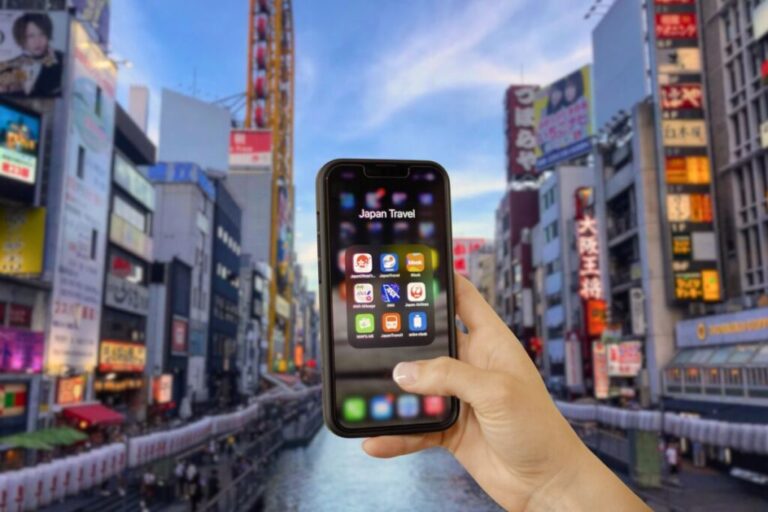
For trains, use an app that helps you compare routes, departure times, platforms, and prices. For translation, make sure you have a reliable app installed before arrival. For maps, save important places in advance, but group them by area instead of creating one endless list.
A good digital setup before departure can reduce a lot of stress once you land.
Read also // Essential Japan Travel Apps
15. Avoid the most common first-time Japan planning mistakes
The first trip to Japan is exciting, but it is very easy to overplan.
Here are the mistakes I see most often.
Trying to visit too many cities
Tokyo, Kyoto, Osaka, Hiroshima, Mount Fuji, Kanazawa, Takayama, Nikko, Nara, Kamakura, Kobe, Nagoya, and Hakone cannot all fit into a normal first trip without consequences.
Every extra city adds transport time, luggage logistics, hotel changes, and mental fatigue.
Underestimating Tokyo
Many first-time visitors give Tokyo only two or three days because they want to “see more of Japan.” But Tokyo is not just one stop. It is a world of neighborhoods, food, culture, shopping, museums, parks, nightlife, and day trips.
Do not rush Tokyo too much.
Booking hotels before building the itinerary
Hotels should follow the route, not the other way around.
First decide your main bases and daily areas. Then choose hotels that make sense.
Assuming the JR Pass is always worth it
The JR Pass can be useful, but only for certain routes. Always calculate before buying.
Planning every day from morning to night
A Japan trip needs space. Train stations take time. Meals take time. Shopping takes time. Getting lost takes time. And sometimes you will simply want to stop and enjoy where you are.
Saving too many places without grouping them
A huge Google Maps list is not an itinerary. Group places by neighborhood and build your days around realistic areas.
Ignoring jet lag
Your first day in Japan should not be the most intense day of your trip. Keep it simple.
Read also // 7 Realistic Mistakes to Avoid on Your First Japan Trip
16. When should you get help planning your first trip?
You can absolutely plan your first trip to Japan by yourself.
But if you feel stuck, confused, or overwhelmed, getting help does not mean giving up the freedom of independent travel. It means saving time, avoiding mistakes, and making better decisions.
You may benefit from itinerary planning help if:
- you have too many saved places and do not know how to organize them;
- you are unsure how many cities to include;
- you do not know where to stay;
- you are confused by trains and passes;
- you are traveling as a couple, family, or group with different interests;
- you want a realistic plan but do not want a packaged tour;
- you want to avoid wasting your first trip on rushed or inefficient days.
My approach is not to create a generic checklist. I help you build a realistic day-by-day Japan itinerary based on your travel dates, pace, interests, and budget.
You still travel independently. You still choose your flights and hotels. But you do not have to build everything from zero.
Final thoughts
Your first trip to Japan does not need to be perfect.
It needs to be clear, realistic, and exciting.
You do not need to visit every famous place. You do not need to follow every Instagram recommendation. You do not need to understand every train line before you arrive.
Start with the basics: how many days you have, when you want to go, what kind of trip you want, and which route makes sense. Then build your itinerary step by step.
Japan rewards curiosity, patience, and good planning. If you give yourself enough time and avoid turning your itinerary into a race, your first trip can become one of the most memorable travel experiences of your life.
FAQ: planning your first trip to Japan
Yes. Japan is one of the best countries in the world for first-time independent travelers. It is safe, efficient, clean, and well connected by public transportation. The main challenge is not safety or difficulty, but planning a realistic itinerary.
For most first-time visitors, 10 to 14 days is ideal. Seven days can work if you focus only on Tokyo and Kyoto, but it will feel fast. With 14 days, you can enjoy Tokyo, Kyoto, Osaka, and one or two extra destinations without rushing too much.
A classic first-time route is Tokyo, Kyoto, and Osaka, with possible day trips to Nara, Kamakura, Nikko, Hiroshima, Miyajima, or Mount Fuji depending on your trip length. The best route depends on your interests and how fast you like to travel.
Both options can work. Many travelers start in Tokyo because it is a common international arrival point and a good introduction to modern Japan. Others prefer starting in Osaka or Kyoto if flights are better. The most important thing is to build a route that avoids unnecessary backtracking.
Not always. Since the price increase, the JR Pass is only worth it for specific itineraries with several long-distance train journeys in a short period. Many first-time travelers are better off buying individual tickets or using regional passes.
No. You do not need to speak Japanese to travel in Japan, especially on a first trip to major destinations like Tokyo, Kyoto, Osaka, Nara, and Hiroshima. However, learning a few basic phrases and using a translation app will make your experience smoother and more respectful.
No. Book flights, hotels, popular attractions, special experiences, and long-distance trains when needed. But do not book every meal and every hour of your day. Leave free time for exploring, resting, shopping, and unexpected discoveries.
Book early if you want to visit places like Universal Studios Japan, Tokyo DisneySea, Ghibli Museum, Ghibli Park, Shibuya Sky, teamLab, popular ryokan, or special restaurants. Availability can be limited, especially during peak travel seasons.
For a first trip, I recommend using practical hotels for most nights and adding one ryokan or onsen stay if it fits your route and budget. A ryokan can be a beautiful experience, but it works best when you have enough time to enjoy it slowly.
Yes, you can plan Japan by yourself. But if you feel overwhelmed by routes, hotels, trains, tickets, and daily planning, getting help with a custom itinerary can save you time and help you avoid common mistakes.
JAPAN TRAVEL COMPANION
Planning the rest of your Japan trip?
Add your travel dates and destinations to see what needs booking, when tickets open and what to plan next.