
How to Use Trains in Japan: A Complete Guide for First-Time Visitors
Last Updated: July 20, 2026
Japan’s railway system is fast, reliable and one of the best ways to explore the country. However, taking your first train in Japan can feel intimidating.
Large stations may contain several railway companies, different ticket gates, dozens of platforms and trains with similar names but completely different stopping patterns.
The good news is that you do not need to understand the entire Japanese railway network before your trip.
For most journeys, you only need to know which line to follow, which train category to board and whether you should use an IC card, a separate ticket or a rail pass.
This guide explains how to use trains in Japan step by step, from planning your route to exiting the station at your destination.
Japan’s railway system is fast, reliable and one of the best ways to explore the country. However, taking your first train in Japan can feel intimidating.
Large stations may contain several railway companies, different ticket gates, dozens of platforms and trains with similar names but completely different stopping patterns.
The good news is that you do not need to understand the entire Japanese railway network before your trip.
For most journeys, you only need to know which line to follow, which train category to board and whether you should use an IC card, a separate ticket or a rail pass.
This guide explains how to use trains in Japan step by step, from planning your route to exiting the station at your destination.
How to use trains in Japan: the quick answer
For most local trains, subways and buses, use a rechargeable IC card such as Suica, PASMO or ICOCA. Tap the card at the ticket gate when entering and again when leaving.
For Shinkansen and Limited Express trains, you will normally need a separate ticket, seat reservation or eligible rail pass.
Before boarding, check five details:
- railway company;
- train line;
- direction or destination;
- train category;
- platform number.
Follow the signs, enter through the correct ticket gate and keep any paper tickets until you have completely exited at your destination.
This article contains affiliate links. I may receive a commission when you purchase through them, at no additional cost to you.
Japan’s railway system is fast, reliable and one of the best ways to explore the country. However, taking your first train in Japan can feel intimidating.
Large stations may contain several railway companies, different ticket gates, dozens of platforms and trains with similar names but completely different stopping patterns.
The good news is that you do not need to understand the entire Japanese railway network before your trip.
For most journeys, you only need to know which line to follow, which train category to board and whether you should use an IC card, a separate ticket or a rail pass.
This guide explains how to use trains in Japan step by step, from planning your route to exiting the station at your destination.
How to use trains in Japan: the quick answer
For most local trains, subways and buses, use a rechargeable IC card such as Suica, PASMO or ICOCA. Tap the card at the ticket gate when entering and again when leaving.
For Shinkansen and Limited Express trains, you will normally need a separate ticket, seat reservation or eligible rail pass.
Before boarding, check five details:
- railway company;
- train line;
- direction or destination;
- train category;
- platform number.
Follow the signs, enter through the correct ticket gate and keep any paper tickets until you have completely exited at your destination.
Which ticket should you use?
| Journey | Best option for most travellers |
|---|---|
| Metro, subway or local city train | IC card |
| Short regional journey | IC card or regular ticket |
| Limited Express train | Basic fare plus Limited Express ticket |
| Shinkansen journey | Individual Shinkansen ticket or eligible rail pass |
| Several long-distance JR journeys | Compare individual tickets with the Japan Rail Pass |
| Multiple journeys inside one region | Compare individual tickets with a regional rail pass |
My usual recommendation for a first trip is simple:
Use an IC card for city transport and buy individual tickets for long-distance trains. Consider a rail pass only after completing your itinerary and comparing the actual cost of your journeys.
Is Japan’s train system difficult to use?
Japan’s train network looks more complicated than it actually is.
Most stations used by international visitors have station names, platform information and train departures displayed in both Japanese and English. Ticket machines in major JR stations also offer English-language menus, and station staff can help when something goes wrong.
The main source of confusion is not the language. It is the number of different operators and train categories.
Japan does not have one single company operating every train.
The network includes:
- the different JR companies;
- privately operated railways;
- municipal subway systems;
- monorails;
- trams;
- local and regional operators.
Tokyo alone includes JR East, Tokyo Metro, Toei Subway and several private railway companies. These operators may share the same station complex while using separate ticket gates.
This means that following a sign for the station name is not always enough. You must also check the company and line you need.
For example, “Shinjuku Station” may refer to sections operated by JR East, Tokyo Metro, Toei Subway, Odakyu or Keio.
Fortunately, route-planning apps normally tell you which operator, station entrance, platform and train category to use.

Understanding the different types of trains in Japan
Not every train on the same line stops at the same stations.
Checking the train category is one of the most important things you can do before boarding.
Local train
A Local, sometimes called futsū or kakueki-teisha, stops at every station on its route.
Local trains are generally the easiest option when travelling a short distance or reaching a minor station.
Rapid train
A Rapid train skips some smaller stations while normally charging the same basic fare as a local train.
Always check that your station appears on the list of stops before boarding.
Express train
An Express train stops at fewer stations than a Rapid service.
On many commuter railways, Express trains can be used with the normal fare. However, terminology and fare rules vary between operators, so never assume that every train labelled “Express” works in exactly the same way.
Limited Express train
A Limited Express train connects important cities and tourist destinations while making relatively few stops.
In most cases, you need:
- a basic fare ticket; and
- an additional Limited Express ticket.
Depending on the service, you may also need a seat reservation.
Examples include the Narita Express, Limited Express Hida, Azusa, Thunderbird and many airport or regional trains.
Shinkansen
The Shinkansen is Japan’s high-speed railway network.
Shinkansen trains use dedicated platforms and normally require a basic fare plus a Shinkansen Limited Express ticket. Some services offer both reserved and non-reserved cars, while others are reservation-only.
Different Shinkansen services operate on the same route.
On the Tokaido Shinkansen between Tokyo, Nagoya, Kyoto and Osaka, for example, Nozomi, Hikari and Kodama trains stop at different numbers of stations.
Read also // How to Buy Train Tickets in Japan and Book the Shinkansen
How train fares work in Japan
Japanese railway fares can look confusing because one journey may require more than one component.
Basic fare
The basic fare covers the distance between your departure and destination stations.
For local and rapid trains, this is usually the only fare you need.
Limited Express or Shinkansen supplement
When taking a Limited Express or Shinkansen service, you normally pay an additional supplement for using the faster train.
Official JR ticketing rules distinguish between the basic fare required for the journey and supplementary tickets for services such as Limited Express trains, Shinkansen and Green Cars.
Seat reservation
Some trains allow you to choose between a reserved and non-reserved car.
A reserved ticket provides a specific:
- train;
- carriage;
- seat number;
- departure time.
Other trains are entirely reservation-only, meaning you cannot simply board and search for an empty seat.
Green Car and Gran Class
The Green Car is the premium seating category found on many Shinkansen and Limited Express trains.
Seats are wider, the environment is generally quieter and there is more personal space.
Gran Class is an even higher category available on selected Shinkansen routes, particularly in eastern and northern Japan.
You do not need either option for a comfortable journey. Ordinary reserved seats are perfectly adequate for most travellers.
IC card, individual tickets or Japan Rail Pass?
These products perform different functions and should not be treated as interchangeable.
IC cards for local transport
Suica, PASMO, ICOCA and other IC cards are rechargeable payment cards.
You add money to the card and tap it on the reader when entering and leaving the station. The correct fare is calculated automatically.
Most major IC cards can be used across many cities and transport systems. They are also accepted by numerous convenience stores, vending machines and station lockers. However, some rural transport systems do not accept them, and an IC card cannot always be used for journeys crossing separate IC-card areas.
An IC card is not an unlimited travel pass. It is primarily a convenient method of payment.
Read also // Suica Card Complete Guide
Individual train tickets
Individual tickets are normally the most flexible option when your itinerary contains only a few long-distance journeys.
You can buy tickets:
- from a ticket machine;
- at a staffed railway counter;
- through an official online reservation system;
- through an authorised booking platform.
Individual tickets are often a better choice than a nationwide rail pass for travellers following a simple Tokyo–Kyoto–Osaka route.
Read also // How to Buy Train Tickets in Japan
Japan Rail Pass
The national Japan Rail Pass provides travel on many JR trains around the country, subject to specific rules and exclusions.
It does not automatically cover municipal subways or every private railway, and it is no longer automatically economical for a standard first-time itinerary.
Do not buy it simply because you plan to use trains.
First calculate the cost of your major journeys and compare it with the current pass price.
Do you actually need the Japan Rail Pass?
The pass can still be useful for itineraries containing several expensive long-distance journeys, but it is not the default choice for every visitor.
Regional rail passes
Regional passes cover a more limited geographical area and can offer better value when your journey is concentrated within one region.
Examples include passes designed for Kansai, Hiroshima, Hokuriku, Tohoku, Kyushu or the wider Tokyo area.
The correct pass depends entirely on your route, travel dates and chosen trains.
[INTERNAL LINK BOX]
A regional pass might save you more
Compare the main regional JR passes and find out which destinations and trains each one covers.
The national Japan Rail Pass and regional passes should be explained in detail in their dedicated articles. This page should help readers identify which type of ticket they need and then send them to the appropriate guide.
How to take a train in Japan step by step
Here is the complete process for taking a regular train, subway or metro service.
1. Plan your route before entering the station
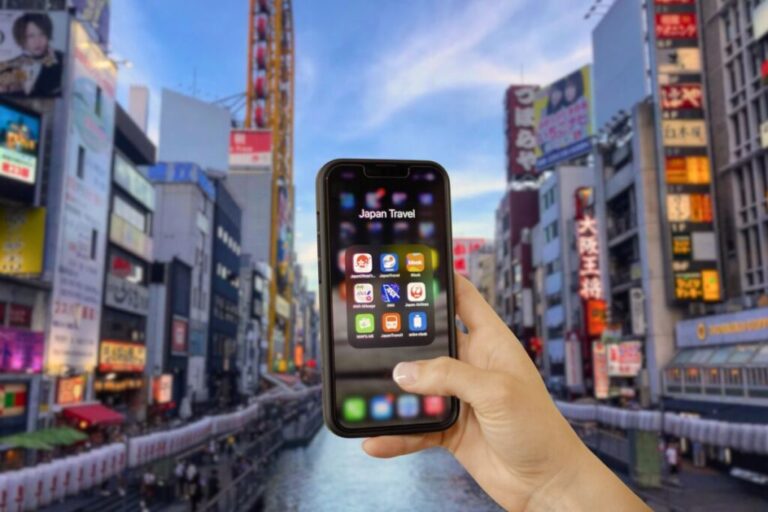
Use Google Maps, Japan Travel by NAVITIME or another reliable transport app.
Check:
- exact departure station;
- railway operator;
- line name;
- destination or direction;
- train category;
- departure time;
- platform;
- required transfers;
- total fare.
Pay attention to the exact station name. Stations with similar names may be located in completely different places.
For example, Osaka Station and Shin-Osaka Station are not the same. Shinkansen trains use Shin-Osaka, while Osaka Station is a major hub for conventional trains.
The same distinction applies to:
- Tokyo and Shinagawa;
- Yokohama and Shin-Yokohama;
- Kobe and Shin-Kobe.
Take a screenshot of your route when you are worried about losing your connection or internet access.
Read also // Best Japan Travel Apps
You will rely on your phone more than you expect
Live train times, platform changes and alternative routes are much easier to manage with a reliable internet connection.
Compare eSIM plans before departure and activate your connection when you arrive in Japan.
This article contains affiliate links. I may receive a commission when you purchase through them, at no additional cost to you.
2. Find the correct part of the station
Large stations often contain separate areas for different operators.
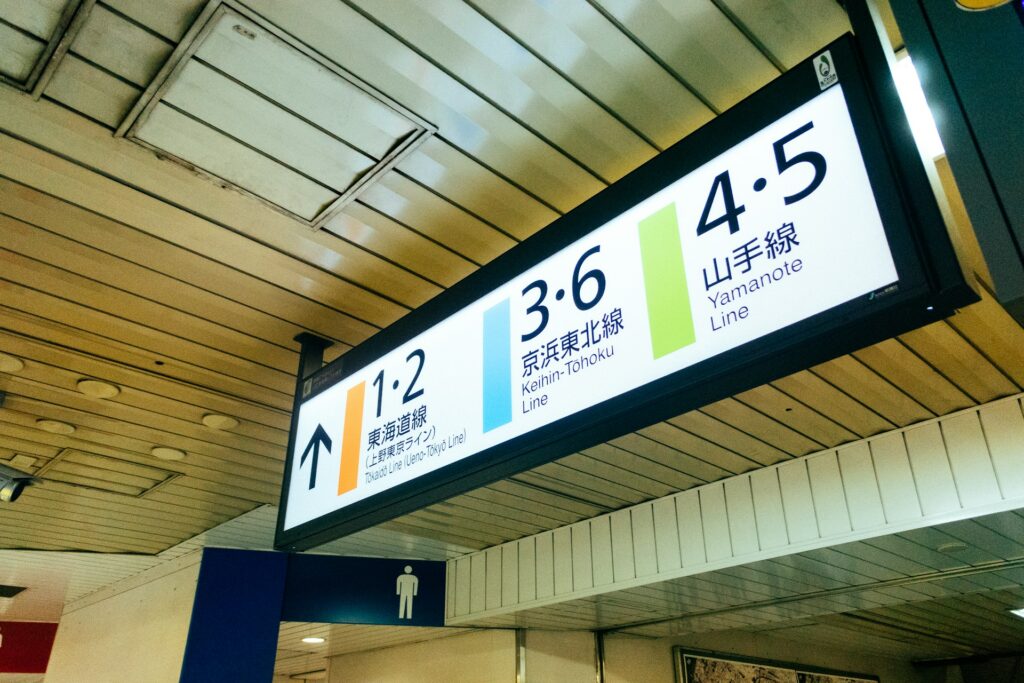
Look for the logo and name of the railway company shown in your route.
Do not enter the first ticket gate you see merely because it displays the correct station name.
At Shinjuku, for example, entering an Odakyu gate will not place you inside the JR East section. You may need to leave, walk through the station and find another operator’s entrance.
Colour coding can help, especially on subway networks, but the line name and destination remain more reliable than colour alone.
3. Pay with your IC card or buy a ticket
For a normal local journey, tap your IC card at the gate.
When using a paper ticket, insert it into the slot. The ticket will emerge on the other side of the gate.
Take the ticket back.
You will normally need it again when leaving your destination station.
When buying a short-distance paper ticket, use the fare map or search for the destination on the machine’s English-language interface.
For a Limited Express or Shinkansen journey, confirm that you have all the required ticket components before entering.

4. Enter through the ticket gate
With an IC card:
- place the card or compatible phone on the illuminated reader;
- wait for the confirmation sound;
- walk through the gate.
With a paper ticket:
- insert the ticket;
- walk through;
- collect the ticket when it comes out.
When transferring between conventional JR lines and the Shinkansen, you may need to insert the conventional ticket and Shinkansen ticket together into the transfer gate. JR Central specifically instructs passengers to insert both required tickets together when making this transfer.
Do not panic when you receive two paper tickets for one Shinkansen journey. One may represent the basic fare and the other the Shinkansen supplement.
Sometimes these components are combined into a single ticket.
5. Find the platform
Electronic departure boards normally show:
- departure time;
- train name or category;
- destination;
- platform;
- delay information;
- number of carriages.
Confirm that both the departure time and destination match your route.
Once on the platform, check the markings on the floor.
These may indicate:
- carriage number;
- door position;
- reserved or non-reserved car;
- Green Car;
- boarding queue.
For a reserved train, stand near the position corresponding to your carriage number before the train arrives.
Japanese trains stop very precisely, so the correct door should open in front of the marked position.
6. Check the train category before boarding
A Local and Rapid train may leave from the same platform within a few minutes of each other.
Boarding the wrong category can cause you to pass your destination without stopping.
Check the electronic display on the side or front of the train and compare it with your app.
When uncertain, show the destination to a member of staff or ask:
“Does this train stop at [station name]?”
A simple version in Japanese is:
“[Station name] ni tomarimasu ka?”
7. Allow passengers to leave first
Stand to the side of the doors and let passengers exit before boarding.
On crowded trains:
- remove your backpack or wear it in front;
- avoid blocking the doors;
- move inside the carriage;
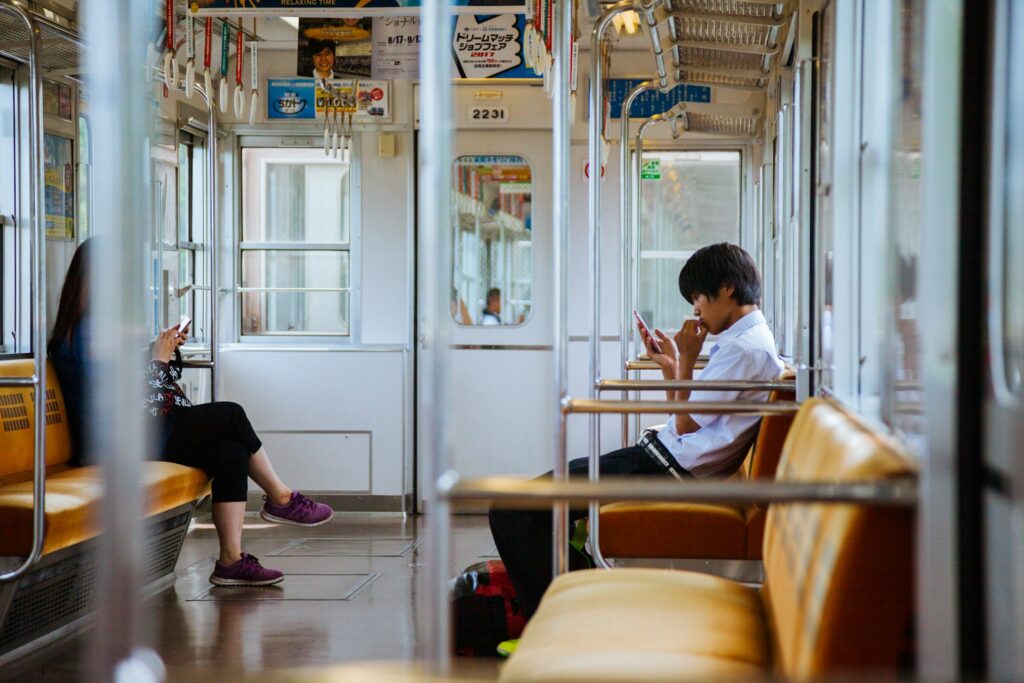
- keep your phone on silent;
- avoid making phone calls;
- use headphones;
- offer priority seats when appropriate.
Talking quietly is acceptable, but loud conversations and phone calls are generally discouraged on Japanese public transport.
Eating is generally avoided on urban commuter trains. Eating a meal is much more normal on Shinkansen and other long-distance services where seats face forward and have tray tables.
8. Follow your progress
Most modern urban trains display the next station in Japanese and English.
Station codes are also helpful. They normally combine letters representing the line with a station number.
For example, a route app may identify a station using both its name and a code such as G09 or M17.
Use the code to confirm that you are travelling in the correct direction.
Announcements may include connections, the side on which the doors will open and warnings about express services.
9. Change trains when required
For a transfer within the same operator, follow signs for the connecting line without leaving the paid area unless instructed otherwise.
When changing between different railway companies, you may need to:
- exit through one company’s gate;
- walk to another section of the station;
- enter again through the second operator’s gate.
With an IC card, tap out and then tap in again.
With paper tickets, the exact process depends on the ticket and operators involved. Use a staffed gate when you are unsure rather than forcing the ticket into the wrong machine.
Allow extra time for transfers at very large stations. A connection described as five minutes by a route app may be uncomfortable when you are carrying luggage or do not know the station.
10. Exit at your destination
With an IC card, tap it at the exit gate. The fare will be deducted automatically.
With a normal paper ticket, insert it into the gate. The machine will usually retain it at the end of the journey.
If your ticket value is insufficient, use a Fare Adjustment machine before exiting or ask at the staffed gate.
Fare adjustment is a useful backup when a journey changes unexpectedly, but deliberately buying the cheapest ticket every time is less convenient than using an IC card or purchasing the correct fare from the beginning.
Read also // How luggage forwarding works in Japan
How to use the Shinkansen
The Shinkansen follows the same basic process, but you need to pay closer attention to your train, seat and ticket.
1. Choose your route and train
Check:
- departure station;
- destination;
- departure time;
- train name;
- carriage;
- seat;
- luggage requirements.
Remember that Shinkansen stations sometimes use a different name from the main city station.
2. Buy or reserve your ticket
Tickets can be purchased from staffed counters, compatible machines and online booking services.
Official reservation systems on some Shinkansen routes allow passengers to travel using a QR ticket or a registered IC card.
Reserve in advance when:
- travelling during a Japanese holiday period;
- travelling with a group;
- carrying large luggage;
- taking the first or last convenient train;
- using a reservation-only service;
- needing seats together;
- wanting a Mount Fuji view.
Read also // Complete Guide to Buying Shinkansen Tickets
Book your Shinkansen before reaching Japan
Compare train times, reserve your seat and avoid spending part of your first day navigating a busy ticket office.
3. Enter the Shinkansen area
Some stations have a separate Shinkansen entrance.
When using two paper tickets, insert both together unless the instructions for your specific ticket say otherwise.
Collect every ticket returned by the gate and keep them until you have fully exited your destination station.
4. Find your carriage
The platform display and floor markings show where each carriage will stop.
Stand near your carriage before the train arrives. Shinkansen stops can be short, so it is better to be ready rather than walking along the platform after the train has arrived.
5. Store your luggage
Normal suitcases can generally be placed on the overhead rack or near your feet when they fit safely.
On the Tokaido, Sanyo, Kyushu and Nishi Kyushu Shinkansen, luggage with total dimensions greater than 160 cm and up to 250 cm requires a reserved seat with an oversized baggage area. Travelling with qualifying oversized luggage without the required reservation may result in a ¥1,000 fee.
Measure the combined height, width and depth of your suitcase before travelling.
Read also // Best Ways to Handle Luggage in Japan
6. Leave the train efficiently
Start preparing shortly before arrival.
Check that you have:
- phone;
- wallet;
- passport;
- camera;
- charging cables;
- bags stored above your seat.
Shinkansen trains continue to another destination quickly, so do not wait until the doors open before collecting all your belongings.
Reserved vs non-reserved seats
A non-reserved ticket allows you to board an eligible non-reserved carriage without having a specific seat assigned.
This provides flexibility, but it does not guarantee that you will sit down.
A reserved ticket assigns you to a specific train and seat.
Choose a reserved seat when:
- travelling during a busy period;
- carrying several bags;
- travelling with children;
- travelling as a couple or group;
- taking a reservation-only train;
- following a tight itinerary.
Choose a non-reserved seat when:
- eligible trains are frequent;
- your departure time is uncertain;
- you are travelling alone;
- you are willing to wait for the next service;
- you are travelling outside peak periods with little luggage.
Some Shinkansen and Limited Express trains do not have non-reserved cars, so always check the service before boarding.
Taking trains in Japan with luggage
Large luggage is one of the main reasons travellers struggle inside Japanese stations.
Many stations contain long corridors, stairs, crowded platforms and lifts that are not located beside the most obvious route.
When possible:
- travel with a medium-sized suitcase;
- use escalators and lifts;
- avoid rush hour;
- reserve luggage space when required;
- send large bags to your next hotel;
- keep one smaller overnight bag with you.
Japan’s luggage forwarding services can send suitcases between hotels, airports and selected service counters.
This can be particularly useful when visiting destinations such as Hakone, Takayama, Koyasan or Miyajima between two major cities.
Do not block train doors or leave luggage unattended in the aisle.
On urban trains, keep smaller bags on the luggage rack, between your feet or close to your body.
Using trains in Japan with children
Children between 6 and 11 years old generally pay half the adult basic fare and half the applicable Limited Express and reserved-seat charges.
Infants and babies can often travel without charge when accompanied, but separate fares apply in certain circumstances, including when they use their own reserved seat.
A child IC card must be configured with the correct reduced-fare status. It is not sufficient to hand a child a standard adult IC card.
When travelling with a stroller:
- avoid rush hour where possible;
- check lift locations before changing platforms;
- use wider accessible gates;
- reserve seats on long-distance trains;
- choose accommodation near a convenient station;
- allow more transfer time than the route app suggests.
On the Shinkansen, a seat with an oversized baggage area can also be useful when travelling with a stroller, although a reservation is required if you want to use the designated space behind the last row.
Common mistakes when using Japanese trains
Entering the wrong operator’s gate
A station may contain several railway companies.
Check the operator logo before tapping your IC card or inserting a ticket.
Boarding a Rapid or Express train that skips your stop
Always verify the stopping pattern.
The train departing first is not necessarily the best train for your journey.
Confusing the destination with the direction
Signs often use a major terminal station to indicate the direction of travel.
Your own destination may not be displayed prominently even though the train stops there.
Confusing similarly named stations
Shin-Osaka is not Osaka Station. Shin-Kobe is not Kobe Station.
Confirm the full station name before travelling.
Assuming the Japan Rail Pass covers every train
JR passes do not automatically cover municipal subways, every private railway or every premium service.
Read the coverage rules before boarding.
Red also // Japan Rail Pass Complete Guide
Assuming an IC card works for every journey
IC cards are excellent for local transport but do not replace every Limited Express or Shinkansen ticket.
Some rural lines and journeys crossing separate IC areas may require a paper ticket.
Throwing away a ticket too early
Keep every paper ticket until you have left the station at your final destination.
Standing in the wrong carriage position
Check your car number before the train arrives, especially on the Shinkansen and reservation-only Limited Express trains.
Underestimating transfers
Ten minutes can disappear quickly inside Tokyo, Shinjuku, Shibuya, Umeda or Kyoto stations.
Add a buffer when carrying luggage, travelling with children or changing operators.
Travelling during rush hour with large suitcases
Urban trains can become extremely crowded on weekday mornings and evenings.
When possible, travel outside peak commuting periods or forward your luggage separately.
Relying on a route app without checking the platform display
Apps are extremely useful, but platforms and services can change after disruption.
Always compare the app with the station’s live departure board.
What happens if something goes wrong?
Japan’s station staff regularly assist visitors with incorrect tickets, missed connections and IC-card errors.
Look for a staffed gate when:
- the automatic gate does not open;
- your IC card shows an error;
- you entered through the wrong operator;
- you lost your ticket;
- you missed a reserved train;
- your journey was interrupted;
- you are unsure which tickets to insert;
- you need accessible assistance.
Show the staff member your route, ticket or destination on your phone.
You do not need to explain the entire problem in Japanese. A screenshot containing the station and departure time is usually enough to make the situation clear.
Frequently asked questions
Can tourists easily use trains in Japan?
Yes. Major stations provide extensive English signage, ticket machines generally have multilingual interfaces and route-planning apps show the required line, platform and transfers.
The first large station may feel overwhelming, but the process becomes much easier after a few journeys.
Do I need a Suica card to use trains in Japan?
No. You can purchase individual paper tickets.
However, an IC card such as Suica, PASMO or ICOCA makes local journeys much easier because the correct fare is calculated when you leave the station.
Can I use Suica in Kyoto and Osaka?
Suica is accepted on many major transport services that support Japan’s interoperable IC-card network, including numerous services in Kyoto and Osaka.
However, IC cards are not accepted on every rural line, bus or long-distance journey.
Read also // Suica Card Complete Guide
Can I use a credit card directly at Japanese ticket gates?
Do not assume that your normal bank card will work at every railway gate.
Contactless bank-card acceptance is expanding, but coverage varies by operator and station. An IC card or valid train ticket remains the more dependable option.
Do I need to book trains in Japan in advance?
Local and urban trains do not normally require reservations.
Advance booking is recommended for Shinkansen, Limited Express and sightseeing trains when travelling during busy periods, with a group, with large luggage or on a reservation-only service.
The applicable rules depend on the ticket and booking method.
What happens if I miss a reserved Shinkansen?
Some tickets may allow you to use a non-reserved car on a later eligible train, while discounted or special products may have different restrictions.
Ask staff before buying another ticket.
Can I eat on trains in Japan?
Avoid eating full meals on crowded local and commuter trains.
Eating is normal on Shinkansen and many long-distance trains, particularly when the carriage has forward-facing seats and tray tables.
Should I buy the Japan Rail Pass?
Only after comparing its price with the individual cost of your planned journeys.
For many standard itineraries, an IC card combined with individual Shinkansen tickets is simpler and less expensive.
Read also // Is the Japan Rail Pass Worth It? Complete Guide
Are regional passes better than the national Japan Rail Pass?
They can be.
A regional pass may provide better value when your itinerary is concentrated within areas such as Kansai, Hiroshima, Hokuriku, Kyushu or Tohoku.
Read also // Complete Regional Japan Rail Pass Guide
My practical advice for first-time visitors
Do not try to memorise Japan’s railway network.
Instead, develop a repeatable routine:
- search for the route;
- confirm the station and operator;
- check the line and direction;
- verify the train category;
- enter with the correct card or ticket;
- compare your app with the platform display;
- keep your tickets until you exit.
For most first-time visitors, the most practical combination is:
- an IC card for local transport;
- individual tickets for Shinkansen and Limited Express trains;
- a national or regional pass only when the itinerary makes it financially worthwhile;
- a working internet connection for live navigation.
Once you understand these four elements, using trains in Japan becomes much less stressful.
Need help organising transport across Japan?
Choosing the right trains is not only about finding the fastest connection.
A realistic itinerary must also consider hotel locations, luggage, transfer times, station size, reserved trains and the pace of your trip.
I create personalised Japan itineraries with practical day-by-day routes, transport guidance and booking recommendations based on your dates and interests.
Continue planning your trip
Japan Rail Pass Complete Guide
Complete Guide to Regional Japan Rail Passes
How to Buy Shinkansen Tickets in Japan
How to Handle Luggage in Japan
How to Plan Your First Trip to Japan
JAPAN TRAVEL COMPANION
Planning the rest of your Japan trip?
Add your travel dates and destinations to see what needs booking, when tickets open and what to plan next.