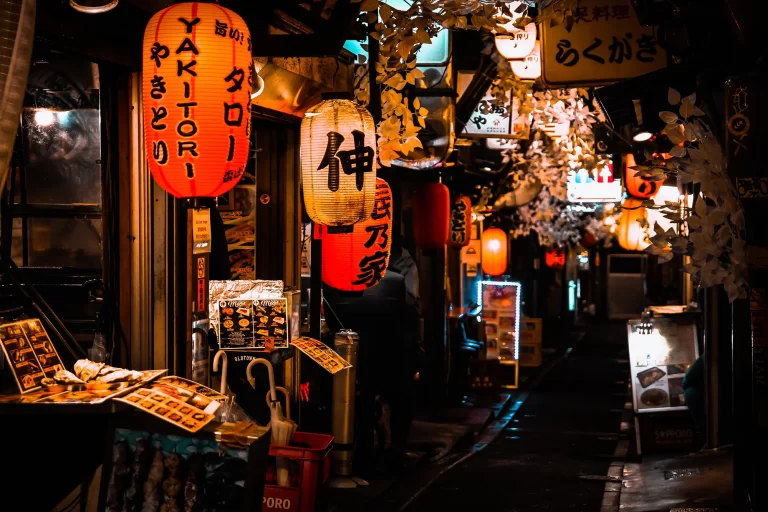

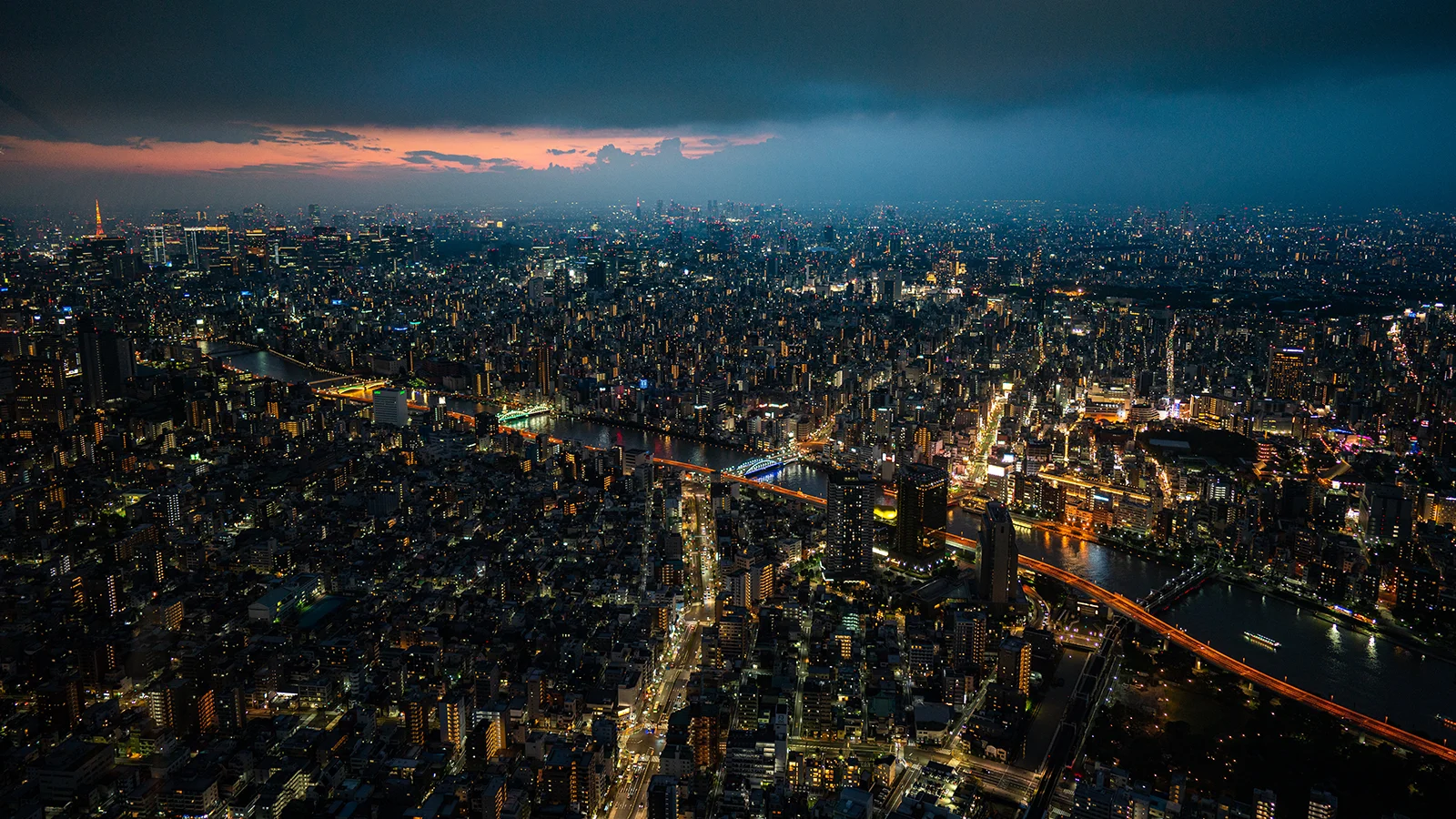
Tokyo Districts: A Comprehensive Guide For a Better Exploration
Disclosure: This guide contains affiliate links. If you book through them, I may earn a small commission at no extra cost to you. This helps support my independent Japan travel content.
Tokyo can feel overwhelming on a first trip.
It is not a city with one obvious center and a simple list of attractions. Tokyo is a collection of very different districts, each with its own atmosphere: neon streets, quiet temples, fashion areas, old neighborhoods, food alleys, museums, parks, nightlife, shopping streets, and futuristic viewpoints.
That is why planning Tokyo by individual attractions often becomes confusing. A better approach is to understand the main districts first, then group your days by area.
This guide explains the most useful Tokyo districts for first-time visitors, what each area is best for, and how to combine them into realistic days without crossing the city back and forth.
Quick answer: which Tokyo districts should first-time visitors see?

For a first trip to Tokyo, focus on a few key districts instead of trying to see everything.

Shibuya and Shinjuku are best for modern Tokyo, nightlife, shopping, and neon energy. Asakusa and Ueno are better for traditional Tokyo, temples, museums, parks, and older neighborhoods. Harajuku and Omotesando work well for fashion, design, youth culture, cafés, and Meiji Shrine. Ginza and Tokyo Station are good for elegant shopping, food, and transport. Akihabara is best for anime, gaming, electronics, and otaku culture.

A good first Tokyo itinerary should group nearby districts together, not jump randomly across the city.
Tokyo districts at a glance
Here is a simple overview of the main Tokyo areas most first-time visitors should understand.
| District | Best for | Good to combine with |
|---|---|---|
| Shibuya | Crossing, shopping, youth culture, nightlife | Harajuku, Omotesando, Daikanyama |
| Shinjuku | Neon, food alleys, nightlife, skyscrapers | Tokyo Metropolitan Government Building, Golden Gai |
| Asakusa | Senso-ji, old Tokyo, traditional streets | Ueno, Tokyo Skytree |
| Ueno | Museums, park, Ameyoko, easy transport | Asakusa, Yanaka |
| Harajuku | Youth culture, fashion, Meiji Shrine | Shibuya, Omotesando |
| Omotesando / Aoyama | Design, architecture, cafés, fashion | Harajuku, Shibuya |
| Ginza | Elegant shopping, food, department stores | Tokyo Station, Tsukiji, Hamarikyu |
| Akihabara | Anime, gaming, electronics | Ueno, Kanda, Jimbocho |
| Roppongi / Azabudai | Museums, nightlife, Tokyo Tower area | Akasaka, Azabudai Hills |
| Toyosu / Odaiba | Bay views, modern attractions, teamLab | Tsukiji, Ginza |

How to understand Tokyo as a first-time visitor
Tokyo is not a city you should plan like a checklist.
If you try to visit Shibuya, Asakusa, Ginza, Akihabara, Odaiba, and Shinjuku all in one day, you will technically “see” many names, but you will spend too much time on trains and not enough time experiencing the city.
The best way to plan Tokyo is by area.
Instead of asking:
“What are the top 20 things to do in Tokyo?”
Ask:
“Which districts make sense together on the same day?”
This makes your itinerary calmer, more realistic, and much easier to enjoy.
A good Tokyo day usually includes one main area, one nearby secondary area, and enough free time for food, shopping, cafés, photos, and unexpected discoveries.
Usefull for you // How to Plan Your First Trip to Japan guide
Best Tokyo districts for first-time visitors
Below is a brief summary of the characteristics of Tokyo districts, so you can understand if it interests you. By clicking on each district name, you will navigate to the dedicated article and find a more detailed exploration of the area. My advice is to visit all of them at least once. Each district is different and has unique features that make it truly enjoyable.
Shibuya
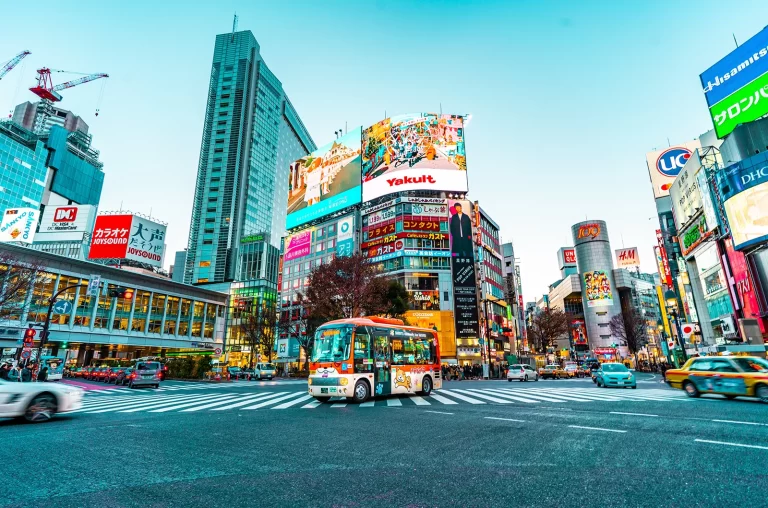
Shibuya is one of the best introductions to modern Tokyo.
This is where many first-time visitors go for the famous Shibuya Scramble Crossing, shopping malls, cafés, nightlife, music, fashion, and big-city energy. It is busy, loud, photogenic, and sometimes chaotic, but that is part of the experience.
Shibuya works especially well in the late afternoon and evening, when the lights come on and the area feels more cinematic.
Best for:
- Shibuya Scramble Crossing;
- shopping;
- cafés;
- nightlife;
- photography;
- first-night Tokyo energy.
Good to combine with:
- Harajuku;
- Omotesando;
- Daikanyama;
- Ebisu.
Activities in Shibuya that you may like:
Shibuya Sky tickets // Samurai Photoshoot Experience // Rooftop Lounge Over Shibuya Crossing
Read the full Shibuya guide for first-time visitors.
Shinjuku
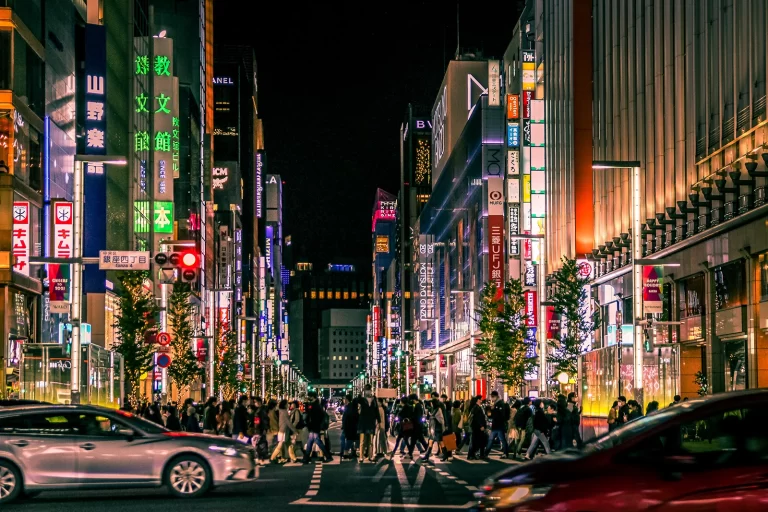
Shinjuku is Tokyo at full volume.
It has one of the busiest train stations in the world, huge department stores, neon streets, skyscrapers, tiny food alleys, bars, restaurants, and some of the strongest “Tokyo at night” atmosphere in the city.
For first-time visitors, Shinjuku can be exciting but also overwhelming. I usually recommend visiting it with a simple plan: choose one or two areas, then leave time to wander.
Do not try to understand all of Shinjuku in one evening.
Best for:
- nightlife;
- food alleys;
- neon streets;
- skyscraper views;
- restaurants;
- energetic city atmosphere.
Good to combine with:
- Tokyo Metropolitan Government Building;
- Omoide Yokocho;
- Golden Gai;
- Shinjuku Gyoen, if visiting during the day.
Activities in Shinjuku that you may like:
Golden Gai Night Tour // Shinjuku Food Tour // Ninja & Kabuki Show
Read the full Shinjuku guide for first-time visitors.
Asakusa
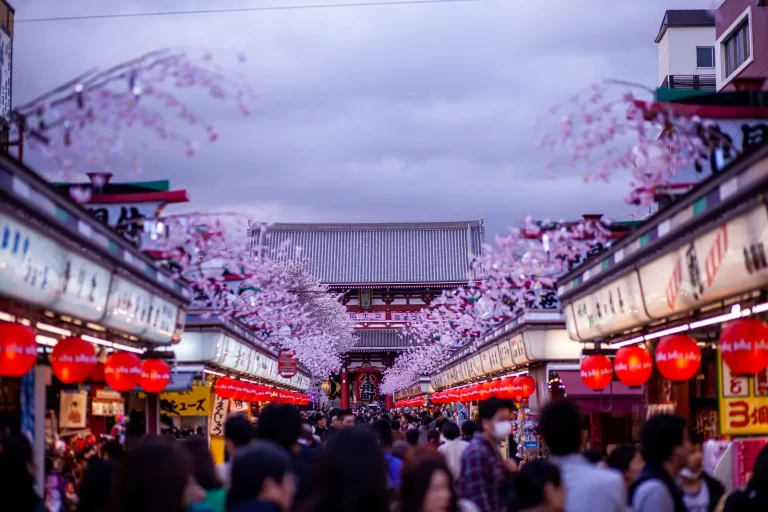
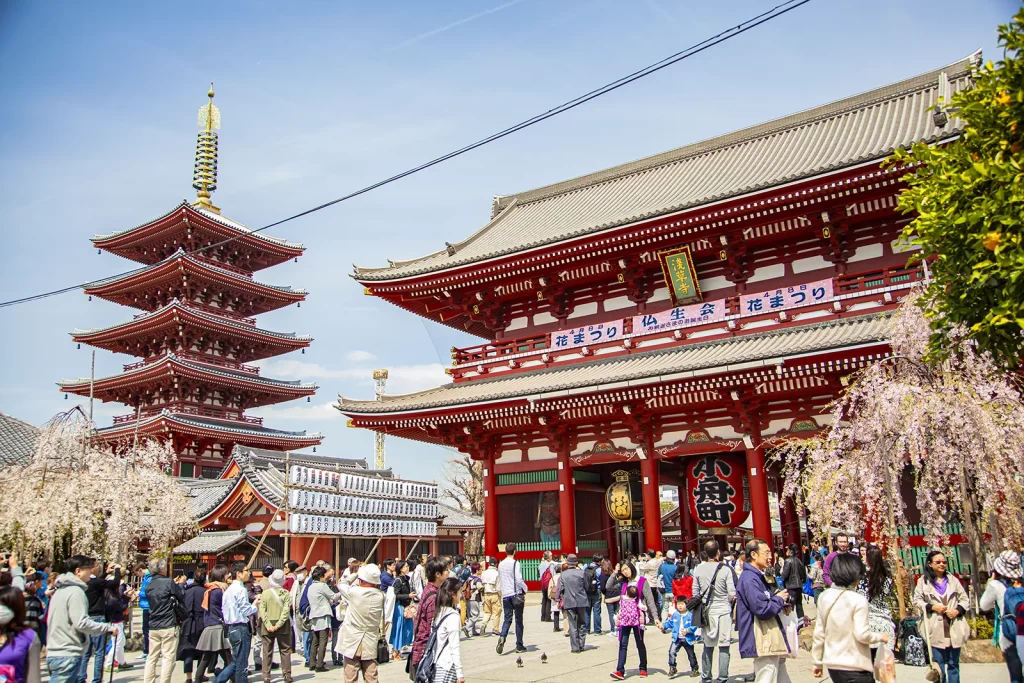
Asakusa is one of the easiest places to experience traditional Tokyo on a first trip.
The main attraction is Senso-ji, Tokyo’s famous Buddhist temple, but the area is also good for old shopping streets, snacks, souvenir shops, kimono rentals, and a slower atmosphere compared to Shibuya or Shinjuku.
Asakusa can be touristy, but it still deserves a place in a first Tokyo itinerary.
Visit early in the morning if you want a quieter experience, or in the evening if you want the temple area with fewer crowds and beautiful lighting.
Best for:
- Senso-ji Temple;
- traditional atmosphere;
- souvenir shopping;
- street snacks;
- first-time Tokyo culture.
Good to combine with:
- Ueno;
- Tokyo Skytree;
- Kappabashi;
- Sumida River.
Read the full Asakusa guide for first-time visitors.
Ueno
Ueno is practical, interesting, and often underrated by first-time visitors.
It has Ueno Park, museums, temples, a zoo, and Ameyoko, a lively market street with food, shops, and a different atmosphere from the polished side of Tokyo.
Ueno is also a useful area for accommodation, especially if you want good transport connections and often better value than Shinjuku or Shibuya.
Best for:
- museums;
- Ueno Park;
- Ameyoko Market;
- transport connections;
- budget-friendly stays.
Good to combine with:
- Asakusa;
- Yanaka;
- Akihabara.
Search for Hotels in Ueno
Read the full Ueno guide for first-time visitors.
Harajuku
Harajuku is often described as Tokyo’s youth fashion district, but there are two very different sides to it.
Takeshita Street is colorful, crowded, commercial, and full of snacks, fashion shops, and young energy. Just a short walk away, Meiji Shrine offers one of the most peaceful green spaces in central Tokyo.
That contrast is exactly why Harajuku works well for first-time visitors.
Best for:
- youth culture;
- fashion;
- street food;
- Meiji Shrine;
- people-watching.
Good to combine with:
- Shibuya;
- Omotesando;
- Yoyogi Park.
Read the full Harajuku guide for first-time visitors.
Omotesando and Aoyama
Omotesando and Aoyama are Tokyo’s more refined fashion and design areas.
This is where you go for architecture, cafés, boutiques, galleries, and a calmer shopping atmosphere than Shibuya or Shinjuku. It is not the most “must-see” area for every traveler, but it is excellent if you like design, photography, fashion, or stylish cafés.
Best for:
- architecture;
- design;
- cafés;
- fashion;
- slower urban walks.
Good to combine with:
- Harajuku;
- Shibuya;
- Nezu Museum area.
Ginza and Tokyo Station
Ginza is elegant, polished, and very different from the neon chaos of Shinjuku.
It is known for department stores, luxury shopping, restaurants, cafés, stationery, food halls, and a more adult atmosphere. Nearby Tokyo Station and Marunouchi are useful for transport, architecture, hotels, and access to other parts of Japan.
This area is especially good if you want Tokyo to feel clean, elegant, and easy to navigate.
Best for:
- shopping;
- food halls;
- department stores;
- Tokyo Station;
- elegant city walks.
Good to combine with:
- Tokyo Station;
- Marunouchi;
- Tsukiji Outer Market;
- Hamarikyu Gardens.
Search for Hotels near Tokyo Station / Ginza
Read the full Ginza guide for first-time visitors.
Akihabara
Akihabara is the district most associated with anime, manga, gaming, electronics, arcades, and otaku culture.
If you are interested in Japanese pop culture, it can be a highlight. If you are not, you probably do not need to spend half a day here. A shorter visit may be enough.
Akihabara is best when you have a specific reason to go: retro games, anime stores, figures, electronics, arcades, or themed cafés.
Best for:
- anime;
- manga;
- gaming;
- electronics;
- arcades;
- pop culture shopping.
Good to combine with:
- Ueno;
- Kanda;
- Jimbocho.
You may like in Akihabara // Otaku Culture Tour with a local guide
Read the full Akihabara guide for first-time visitors.
Roppongi, Azabudai and Tokyo Tower area
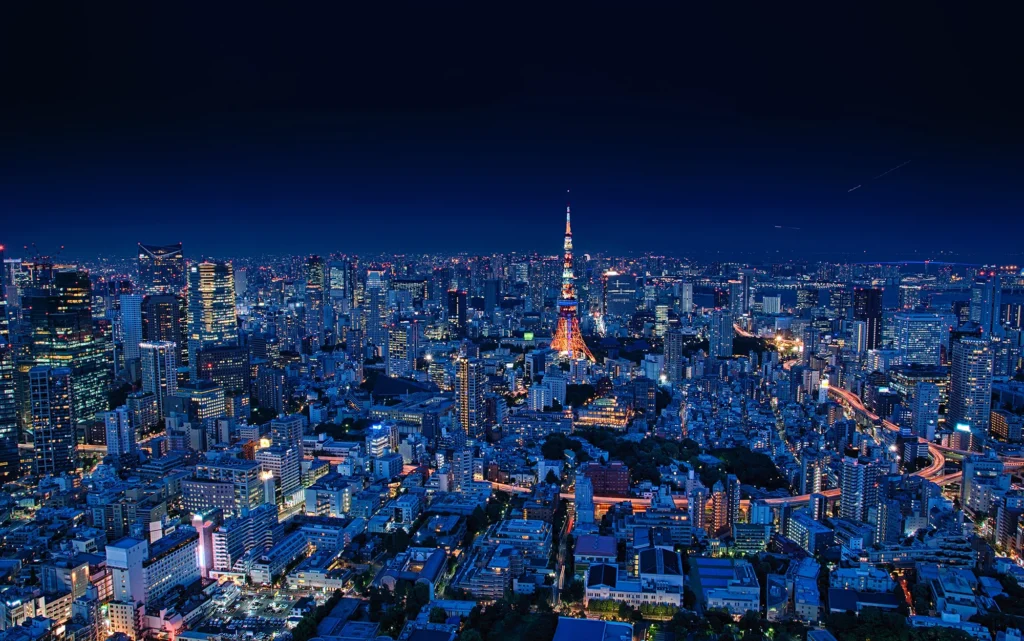
Roppongi is known for nightlife, museums, international restaurants, and city views. Nearby Azabudai has become more relevant for visitors thanks to major new developments and attractions, while Tokyo Tower remains one of the most iconic landmarks in the city.
This area works well if you are interested in museums, modern architecture, nightlife, or viewpoints.
Best for:
- museums;
- nightlife;
- Tokyo Tower;
- city views;
- modern Tokyo.
Good to combine with:
- Azabudai Hills;
- Tokyo Tower;
- Akasaka;
- teamLab Borderless.
You may like in Roppongi // teamLab Borderless tickets / Tokyo Tower tickets
Read the full Roppongi guide for first-time visitors.
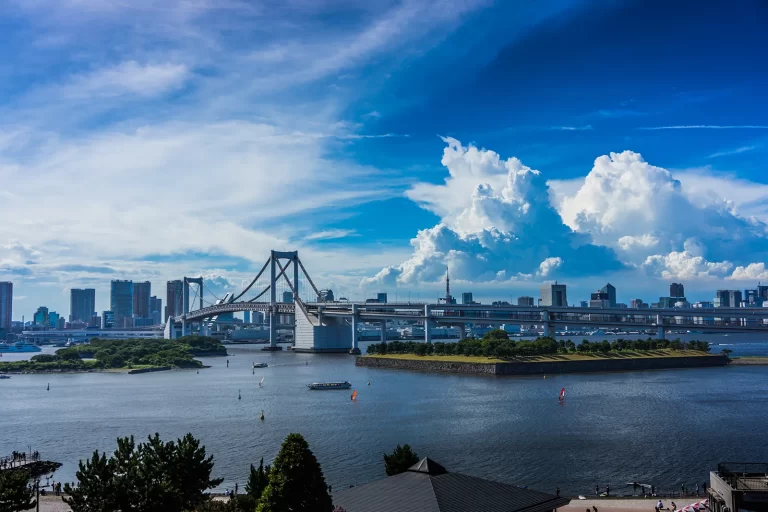
Toyosu and Odaiba
Toyosu and Odaiba are not traditional Tokyo. They feel more modern, open, and spacious.
This area is useful if you want bay views, modern attractions, shopping malls, waterfront walks, or teamLab Planets in Toyosu. It can be fun, but for a short first trip I would not prioritize it over Shibuya, Shinjuku, Asakusa, Ueno, or Ginza unless you have a specific attraction in mind.
Best for:
- bay views;
- modern attractions;
- teamLab Planets;
- shopping malls;
- family-friendly activities.
Good to combine with:
- Tsukiji;
- Ginza;
- Odaiba waterfront.
Activities you may like in Odaiba // teamLab Planets / Toyosu experiences
Read the full Odaiba guide for first-time visitors.
Best Tokyo district combinations for a realistic itinerary
This is the most important part of planning Tokyo.
Do not build your days by randomly choosing attractions. Build your days by combining areas that make sense together.
| Type of day | Combine these areas |
| Modern Tokyo day | Shibuya + Harajuku + Omotesando |
| Classic Tokyo night | Shinjuku + Omoide Yokocho + Golden Gai |
| Traditional Tokyo day | Asakusa + Ueno + Yanaka |
| Anime and gaming day | Akihabara + Ueno or Ikebukuro |
| Elegant Tokyo day | Ginza + Tokyo Station + Tsukiji / Hamarikyu |
| Modern bay day | Toyosu + teamLab + Odaiba |
| Culture and nightlife day | Roppongi + Azabudai + Tokyo Tower |
For most first-time visitors, I would start with these three Tokyo days:
Day 1: Shibuya, Harajuku and Omotesando
This gives you modern Tokyo, youth culture, fashion, cafés, Meiji Shrine, and the Shibuya evening atmosphere.
Day 2: Asakusa, Ueno and Yanaka
This gives you temples, old Tokyo, museums, markets, and a slower atmosphere.
Day 3: Ginza, Tokyo Station and Shinjuku evening
This gives you elegant Tokyo during the day and neon Tokyo at night.
If you have more time, add Akihabara, Roppongi, Toyosu, Odaiba, Shimokitazawa, Koenji, Kichijoji, or a day trip outside Tokyo.
Need help planning your Tokyo days?
Planning Tokyo is not just choosing attractions. It is deciding which areas make sense together.
If your Google Maps is full of saved cafés, temples, shops, viewpoints, anime spots, restaurants, and day trips, I can help you turn that list into a realistic Tokyo itinerary grouped by area, pace, and travel style.
You keep the freedom of an independent trip, but you avoid wasting time crossing the city back and forth.
Best areas to stay in Tokyo for first-timers
| Area | Best for |
| Shinjuku | Nightlife, transport, restaurants, big-city energy |
| Ueno | Good value, transport, museums, Asakusa access |
| Asakusa | Traditional atmosphere, quieter evenings, good value |
| Ginza / Tokyo Station | Comfort, elegance, transport, easy connections |
| Shibuya | Shopping, nightlife, younger atmosphere |
If it is your first trip and you want convenience, Shinjuku, Ueno, Ginza/Tokyo Station, and Asakusa are usually safe choices. Shibuya is exciting, but often more expensive.
| Best for nightlife and energy | Hotels in Shinjuku |
| Best value and transport | Hotels in Ueno |
| Best traditional atmosphere | Hotels in Asakusa |
| Best comfort and connections | Hotels near Tokyo Station / Ginza |
| Best for shopping and younger travelers | Hotels in Shibuya |
Usefull for you // Where to Stay in Tokyo for First-Timers guide
Common mistakes when planning Tokyo
Trying to see too many districts in one day
Tokyo is huge. Even when train connections are good, moving across the city takes time and energy. Plan fewer areas and experience them better.
Treating Tokyo like a checklist
Tokyo is not only Shibuya Crossing, Senso-ji, Shinjuku, and Akihabara. Leave time for side streets, food, cafés, parks, and random discoveries.
Staying too far from useful transport
A cheaper hotel is not always better if it adds 30 or 40 minutes every morning and evening. Location matters.
Visiting areas in the wrong order
Some districts are better in the morning, like Asakusa. Others are better in the evening, like Shinjuku and Shibuya. Plan your day around the atmosphere, not only the map.
Underestimating Tokyo
Many first-time visitors give Tokyo only two or three days because they want to see more of Japan. But Tokyo is not just one city stop. It is a world of neighborhoods.
Final thoughts
The best way to explore Tokyo is not to chase every famous spot.
It is to understand the personality of each district and build your days around areas that work well together.
For a first trip, focus on the essentials: Shibuya, Shinjuku, Asakusa, Ueno, Harajuku, Omotesando, Ginza, Tokyo Station, and maybe Akihabara or Roppongi depending on your interests.
You do not need to see every district. You need to choose the ones that match your trip.
Tokyo becomes much easier to enjoy when you stop treating it like a checklist and start exploring it by area.
FAQ: Tokyo districts for first-time visitors
There is no single best district for everyone, but Shinjuku, Shibuya, Asakusa, Ueno, Ginza, and Tokyo Station are among the most useful areas for a first trip. Shinjuku and Shibuya are best for modern Tokyo, while Asakusa and Ueno are better for traditional atmosphere and museums.
For a first trip, 4 to 5 full days in Tokyo is a good minimum. With 6 or 7 days, you can explore more neighborhoods and add one or two day trips.
Shinjuku is usually better for transport, nightlife, restaurants, and big-city energy. Shibuya is better for shopping, youth culture, cafés, and iconic modern Tokyo. Both are worth visiting.
Asakusa is the easiest traditional area for first-time visitors, especially because of Senso-ji Temple, Nakamise-dori, and the old-town atmosphere. Ueno and Yanaka are also good for a more traditional side of Tokyo.
Plan Tokyo by districts. Grouping nearby areas together saves time, reduces stress, and makes each day feel more natural.
Good areas for first-time visitors include Shinjuku, Ueno, Asakusa, Ginza, Tokyo Station, and Shibuya. The best choice depends on your budget, travel style, and itinerary.
Akihabara is worth visiting if you are interested in anime, gaming, manga, electronics, arcades, or otaku culture. If those are not important to you, a short visit may be enough.
JAPAN TRAVEL COMPANION
Planning the rest of your Japan trip?
Add your travel dates and destinations to see what needs booking, when tickets open and what to plan next.