
15-Day Japan Itinerary for First-Time Visitors: Tokyo, Kyoto, Osaka, Nara, Hiroshima & Miyajima
Last Updated: July 15, 2026
Planning a two-week trip to Japan can feel overwhelming.
Tokyo alone could fill an entire itinerary. Kyoto has more temples than you could realistically visit in a month. Then there are Osaka, Nara, Hiroshima, Miyajima, Mount Fuji, Hakone, Kanazawa, Takayama, Nikko, and dozens of other places that keep appearing in travel videos, Instagram saves, and “must-see Japan” lists.
The biggest mistake first-time travelers make is trying to fit everything into one trip.
Japan is incredibly efficient, but it is not small. Train stations are huge, transfers take time, and moving too often between hotels can quickly turn your dream trip into a rushed checklist.
This 15-day Japan itinerary is designed to give you a balanced first-time experience: Tokyo, Kyoto, Osaka, Nara, Hiroshima, Miyajima, and a final night back in Tokyo before your flight home.
It includes major highlights, realistic travel pacing, day trip ideas, where to stay, and practical booking tips so you can enjoy Japan without feeling constantly exhausted.
Affiliate disclosure: This article may contain affiliate links. If you book through these links, I may earn a small commission at no extra cost to you. This helps support the site and allows me to keep creating Japan travel guides.
Quick Overview: 15-Day Japan Itinerary
Here is the basic structure of this itinerary:
| Day | Destination | Overnight |
|---|---|---|
| Day 1 | Arrival in Tokyo | Tokyo |
| Day 2 | Ueno + Asakusa + Tokyo Skytree | Tokyo |
| Day 3 | Harajuku + Shibuya + Shinjuku | Tokyo |
| Day 4 | Tsukiji + Ginza or Odaiba | Tokyo |
| Day 5 | Kamakura or Enoshima day trip | Tokyo |
| Day 6 | Tokyo to Kyoto + Gion | Kyoto |
| Day 7 | East Kyoto temples | Kyoto |
| Day 8 | Fushimi Inari + Tofuku-ji | Kyoto |
| Day 9 | Arashiyama | Kyoto |
| Day 10 | Nara day trip | Kyoto |
| Day 11 | Osaka day trip | Kyoto or Osaka |
| Day 12 | Kyoto to Hiroshima | Hiroshima |
| Day 13 | Miyajima | Hiroshima or Miyajima |
| Day 14 | Return to Tokyo | Tokyo |
| Day 15 | Departure from Japan | Flight home |
This itinerary works best if you use three main hotel bases:
- Tokyo for the first 5 nights;
- Kyoto for 6 nights;
- Hiroshima for 1–2 nights;
- Tokyo for the final night before flying home.
The idea is simple: fewer hotel changes, less luggage stress, and more time actually enjoying Japan.
Book your main hotel bases early:
- Find hotels in Tokyo near Ueno, Shinjuku or Ginza
- Find hotels in Kyoto near Gion or Kyoto Station
- Find hotels in Hiroshima near Hiroshima Station or Peace Memorial Park
Before You Go: Should You Buy a Japan Rail Pass?
Do not automatically buy a 14-day Japan Rail Pass for this itinerary.
For many years, the nationwide JR Pass was an obvious choice for first-time Japan trips. Today, because of price increases, you should compare carefully before buying.
As of July 2026, the official ordinary-class Japan Rail Pass costs ¥50,000 for 7 days, ¥80,000 for 14 days, and ¥100,000 for 21 days when purchased online. JR also lists higher overseas agency prices for purchases made on or after October 1, 2026.
For this 15-day itinerary, the 14-day JR Pass is often not worth it unless you add extra long-distance train trips. The better strategy is usually one of these:
Option 1: Individual Shinkansen Tickets
Buy separate bullet train tickets for:
- Tokyo to Kyoto;
- Kyoto or Shin-Osaka to Hiroshima;
- Hiroshima to Tokyo.
This gives you more flexibility and lets you use the fastest Nozomi trains without needing a JR Pass add-on ticket.
Option 2: 7-Day JR Pass
A 7-day JR Pass may make sense if you activate it for the long-distance section of the trip, for example from Day 8 to Day 14, covering Kyoto-area JR trips, Hiroshima, Miyajima, and the return to Tokyo.
But do the math before buying.
Option 3: JR West Kansai-Hiroshima Area Pass
This can be a very interesting option if you are already in Kansai and want to visit Hiroshima and Miyajima.
The JR West Kansai-Hiroshima Area Pass is a 5-day pass costing ¥17,000 for adults. It covers the Sanyo Shinkansen between Shin-Osaka and Hiroshima, JR West local lines in the valid area, and the JR West Miyajima Ferry.
This does not cover the Tokaido Shinkansen between Tokyo and Kyoto/Shin-Osaka, so you would still need separate tickets for Tokyo–Kyoto and Hiroshima–Tokyo.
Before buying any rail pass, compare your route carefully.
If you’re interested in getting a Japan Rail Pass, you can buy a JR Pass from recommened provider as well as a Kansai-Hiroshima Area Pass for Miyajima.
What About the Kansai Railway Pass?
The old “Kansai Thru Pass” name is no longer the best wording to use. In 2026, the relevant product is the Kansai Railway Pass Lite, which covers many metro and private railway lines across Kansai, but it does not cover JR lines, Kyoto City Subway, Keihan Otsu Line, Randen, or buses.
For a first-time itinerary like this one, I would not tell every traveler to buy it automatically. It can be useful, but only if your exact routes match the covered lines.
Where to Stay for This 15-Day Japan Itinerary
Choosing the right hotel location matters more than choosing a “beautiful” hotel far from transport.
In Japan, staying near the right station can save you hours across the trip.
Best Areas to Stay in Tokyo
For this itinerary, I recommend:
- Ueno – excellent if you arrive at Narita and want easy access to Asakusa, Akihabara and northern Tokyo;
- Shinjuku – best for nightlife, transport connections and first-time energy;
- Ginza / Tokyo Station area – great for comfort, shopping and Shinkansen access;
- Shibuya – great for nightlife and younger travelers, but often more expensive.
Recommended hotel search:
Also Read // Where to stay in Tokyo Complete Guide
Best Areas to Stay in Kyoto
For this itinerary, I recommend:
- Gion / Higashiyama – best atmosphere and walking access to traditional Kyoto;
- Kyoto Station – best for day trips to Nara, Osaka and Hiroshima;
- Kawaramachi / Sanjo – good balance between food, shopping and transport.
If this is your first trip, Gion is beautiful, but Kyoto Station is more practical. Choose based on your travel style.
Recommended hotel search in Kyoto:
Also read // Best hotels in Kyoto for first-time visitors
Best Areas to Stay in Hiroshima
For Hiroshima, stay near:
- Hiroshima Station if you want easy train access;
- Peace Memorial Park if you want to be closer to the main sights;
- Miyajima if you want a special overnight experience.
Staying on Miyajima is more expensive, but it can be magical after the day-trippers leave.
Recommended hotel search in Hiroshima:
15-Day Japan Itinerary
Day 1: Arrival in Tokyo
Welcome to Japan.
Your first day should be simple. Do not plan major sightseeing unless your flight arrives early and you feel surprisingly energetic.
Your goal today is to:
- get from the airport to your hotel;
- check in;
- withdraw some cash;
- set up your IC card or digital Suica;
- get your eSIM working;
- eat something simple;
- sleep at a reasonable local time.
If you land at Haneda Airport, Shinjuku, Shibuya, Ginza and Tokyo Station are all convenient options.
If you land at Narita Airport, Ueno and Tokyo Station are especially practical because of airport train connections.
Before landing in Japan, book your essentials:
- eSIM for Japan by Airalo or Sakura Mobile
- Tokyo airport transfer (from Narita or Haneda) or train ticket
- Travel insurance for Japan
- Pocket Wi-Fi, if you prefer it over eSIM
Day 2: Ueno, Asakusa and Tokyo Skytree
Start your first full day in Ueno.
Ueno is a great introduction to Tokyo because it combines parks, museums, temples, street food and old Tokyo atmosphere.
In the morning, visit:
- Ueno Park;
- Shinobazu Pond;
- Tokyo National Museum, if you enjoy history and art;
- Ameyoko shopping street.
Then take the Ginza Line to Asakusa, one of the most traditional areas of Tokyo.
Here you can visit:
- Kaminarimon Gate;
- Nakamise-dori shopping street;
- Senso-ji Temple;
- the streets around Asakusa for snacks and souvenirs.
In the late afternoon or evening, continue toward Tokyo Skytree. The view is especially impressive at sunset or after dark, when Tokyo becomes a sea of lights.
Recommended booking:
Also read // Asakusa Travel Guide || Best Things to Do in Ueno
Day 3: Harajuku, Shibuya and Shinjuku
Today is your modern Tokyo day.
Start at Harajuku Station and visit Meiji Shrine, one of the most peaceful places in central Tokyo. Then walk toward Takeshita Street, Harajuku’s famous youth fashion street.
After that, continue toward Omotesando if you want a more stylish and architectural side of Tokyo, or walk toward Shibuya if you want to keep the day more energetic.
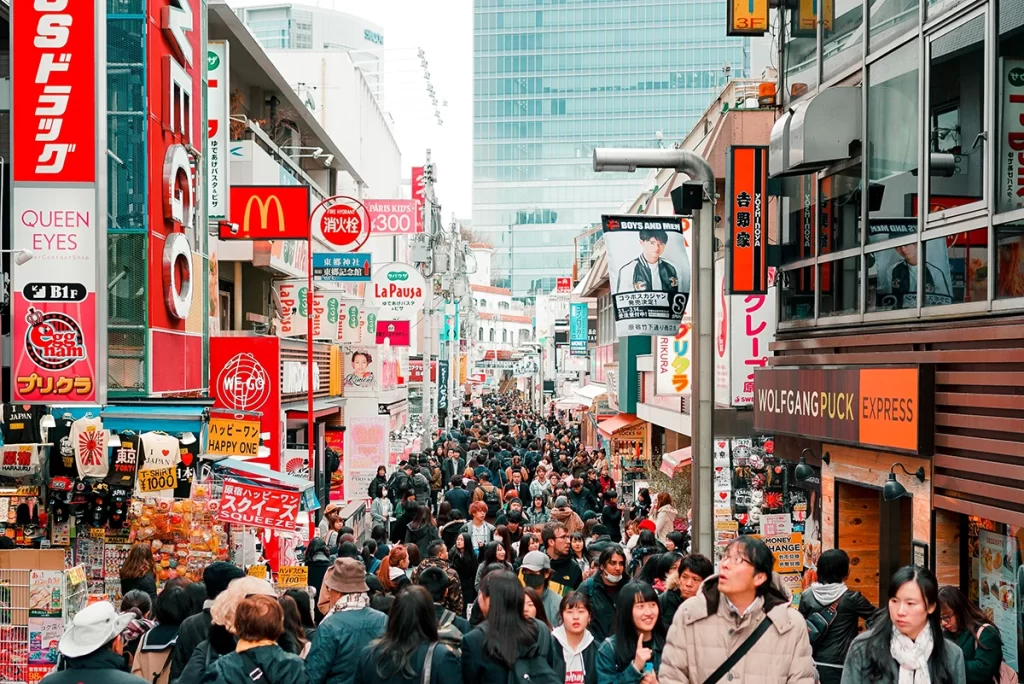
In Shibuya, don’t miss:
- Hachiko Statue;
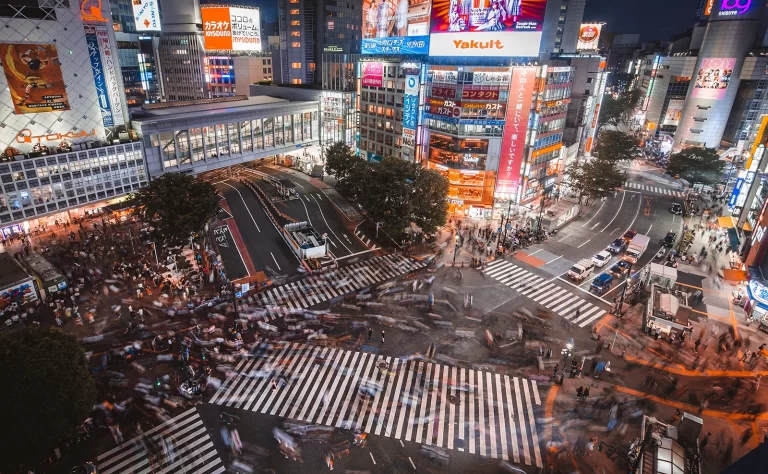
- Shibuya Crossing;
- Shibuya Scramble Square;
- Center Gai;
- Miyashita Park.
For one of the best views in Tokyo, consider booking Shibuya Sky. It is especially popular around sunset, so reserve in advance if it is high on your list.
Recommended booking:
Book Shibuya Sky tickets in advance, especially if you want to go for the sunset view.
End the day in Shinjuku.
You can explore:
- Omoide Yokocho;
- Golden Gai;
- Kabukicho;
- Tokyo Metropolitan Government Building observation area;
- Shinjuku Gyoen, if you prefer a quieter afternoon.
Do not try to do everything. Shinjuku is huge. Pick one or two areas and enjoy the atmosphere.
Day 4: Tsukiji, Ginza and Odaiba
Start the day at Tsukiji Outer Market.
The inner wholesale market moved to Toyosu in 2018, but Tsukiji Outer Market is still a great place for food, small restaurants and street snacks.
Go early and try:
- sushi;
- tamagoyaki;
- grilled seafood;
- matcha sweets;
- onigiri or rice bowls.
After Tsukiji, walk or take the subway to Ginza. This is Tokyo’s elegant shopping district, perfect for department stores, stationery, design shops and food halls.
In the afternoon, you have two good options.
Option A: Odaiba
Odaiba is good if you want waterfront views, shopping malls, futuristic architecture and a relaxed afternoon.
Option B: Toyosu / TeamLab Area
If digital art exhibitions are available during your travel dates, this can be one of Tokyo’s most memorable paid experiences. Always book in advance because popular time slots can sell out.
Suggested activities:
- TEAMlab Planets in Odaiba
- Odaiba Special Tour Pass. A great value excursion ticket that lets you enjoy popular leisure facilities around Odaiba
- Tokyo Joypolis Amusement Park
Also Read // Best Free Things to Do in Tokyo
Day 5: Kamakura and Enoshima Day Trip
For your last full day based in Tokyo, take a day trip to Kamakura.
Kamakura is a historic coastal city south of Tokyo, famous for temples, shrines, small streets and the Great Buddha.
A realistic Kamakura route could include:
- Kita-Kamakura temples in the morning;
- Tsurugaoka Hachimangu Shrine;
- Komachi-dori shopping street;
- Hase-dera Temple;
- the Great Buddha of Kamakura.
If you do not want a full temple day, continue to Enoshima in the afternoon using the Enoden Line.
Enoshima gives you a more coastal atmosphere, with sea views, small shops, shrines and, on clear days, possible views of Mount Fuji.
Day 6: Tokyo to Kyoto and First Evening in Gion
Today you travel from Tokyo to Kyoto by Shinkansen.
Try to leave Tokyo in the morning so you can arrive in Kyoto around lunchtime or early afternoon.
After checking in, keep the day gentle. Kyoto rewards slow walking, especially in the historic eastern districts.
For your first afternoon, explore:
- Maruyama Park;
- Yasaka Shrine;
- Hanamikoji Street;
- Ishibe-koji;
- Ninenzaka;
- Sannenzaka;
- the area around Kiyomizu-dera.
Do not worry if you do not enter every temple today. This first Kyoto walk is more about atmosphere than checking boxes.
Recommended hotel areas for this itinerary: Gion, Higashiyama, Kawaramachi or Kyoto Station.
Read also // Where to Stay in Kyoto || Kyoto Districts Explained
Day 7: East Kyoto Temples
Today is your main Kyoto temple day.
Rather than trying to visit every famous temple in the city, focus on one area and enjoy it properly.
A beautiful route for first-time visitors is East Kyoto, including:
- Kiyomizu-dera;
- Ninenzaka and Sannenzaka;
- Kodai-ji;
- Yasaka Shrine;
- Chion-in;
- Nanzen-ji;
- Philosopher’s Path;
- Ginkaku-ji.
This is a lot for one day, so adapt based on your energy. If you start early, you can visit Kiyomizu-dera before the biggest crowds arrive.
Kyoto can be very crowded, especially during cherry blossom season, autumn foliage and weekends. The earlier you start, the better your experience will be.
Suggested activities:
Day 8: Fushimi Inari and Tofuku-ji
Start early and go to Fushimi Inari Taisha, one of the most iconic places in Japan.
The famous red torii gates are open all day, but the experience is much better early in the morning. If you arrive late, expect crowds around the lower sections.
You do not need to hike the entire mountain unless you want to. Many travelers walk part of the way up, enjoy the atmosphere, and then continue with the rest of the day.
After Fushimi Inari, visit Tofuku-ji, especially if you are traveling in autumn. It is one of Kyoto’s most famous fall foliage spots.
In the afternoon, choose one of these options:
- return to central Kyoto for a slower afternoon;
- visit Sanjusangen-do;
- explore Kyoto Station and its surrounding food areas;
- add a sake tasting experience in Fushimi.
Day 9: Arashiyama
Arashiyama deserves a full day.
Many itineraries treat it as a quick bamboo forest stop, but the area has much more to offer.
Start early at the Arashiyama Bamboo Grove, then visit:
- Tenryu-ji Temple;
- Okochi Sanso Villa;
- Togetsukyo Bridge;
- the riverside area;
- Iwatayama Monkey Park, if you are comfortable with a short uphill walk.
The bamboo grove gets crowded quickly, so go early if photos matter to you.
For a quieter experience, spend more time in the temples and gardens north of the main tourist streets. Arashiyama is much better when you slow down.
Day 10: Nara Day Trip From Kyoto
Nara is one of the easiest and most rewarding day trips from Kyoto.
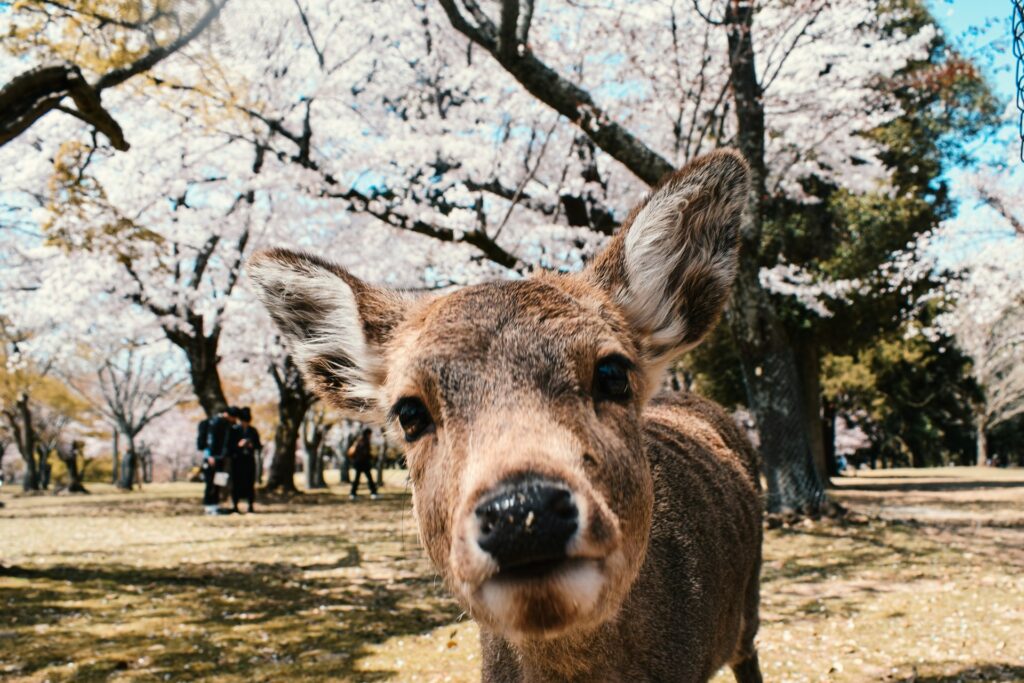
It is famous for the deer that roam around Nara Park, but the real reason to visit is the combination of ancient temples, huge wooden structures and peaceful walking routes.
A good first-time Nara route includes:
- Kofuku-ji;
- Nara Park;
- Todai-ji Temple;
- Nigatsu-do;
- Kasuga Taisha;
- Isuien Garden, if you want a quieter stop.
Many people rush Nara as a half-day trip, but I recommend giving it most of the day.
Important tip: the deer are cute, but they are still wild animals. Do not tease them with food, and be careful with maps, tickets and paper items.
Read also // How to Spend One Day in Nara
Day 11: Osaka Day Trip
Today, visit Osaka.
From Kyoto, Osaka is easy to reach by train, so you do not need to change hotels unless you want more nightlife or plan to visit Universal Studios Japan.
For a first Osaka day, choose a realistic mix from these areas:
- Osaka Castle;
- Umeda Sky Building;
- Shinsekai;
- Kuromon Market;
- Namba;
- Dotonbori.
End the day in Dotonbori, Osaka’s most famous food and entertainment area.
Try:
- takoyaki;
- okonomiyaki;
- kushikatsu;
- ramen;
- street snacks around Namba.
Should You Visit Universal Studios Japan?
Universal Studios Japan can be amazing, especially if you are interested in Super Nintendo World, Harry Potter, Minions or theme parks in general.
But it needs a full day.
If you want to visit Universal Studios Japan, I recommend either:
- adding one extra day to the itinerary;
- replacing the Osaka sightseeing day;
- staying one night in Osaka.
Do not try to visit USJ and “see Osaka” properly on the same day. It will be too rushed.
Suggested experience in Osaka:
- Universal Studios Japan tickets
- Osaka food tour
- Osaka Amazing Pass: Access to approximately 40 facilities and unlimited rides on Osaka public Transport
Day 12: Kyoto to Hiroshima
Today you travel from Kyoto to Hiroshima.
If you use the JR West Kansai-Hiroshima Area Pass, remember that the Sanyo Shinkansen section is covered between Shin-Osaka and Hiroshima, but the pass does not cover the Tokaido Shinkansen between Tokyo and Shin-Osaka.
After arriving in Hiroshima, focus on the central historical area:
- Peace Memorial Park;
- Hiroshima Peace Memorial Museum;
- Atomic Bomb Dome;
- Hiroshima Castle;
- Shukkeien Garden, if you have time and energy.
The Peace Memorial Museum can be emotionally heavy. Do not plan the day too tightly around it.
For dinner, try Hiroshima-style okonomiyaki. It is different from the Osaka version and is one of the city’s signature foods.
Day 13: Miyajima Island
Miyajima is one of the most beautiful places in Japan and a perfect addition to a first-time itinerary.
The island is famous for Itsukushima Shrine and its floating torii gate, but the whole island is worth exploring.
A classic Miyajima day includes:
- ferry to Miyajima;
- Itsukushima Shrine;
- walking around the shopping streets;
- trying momiji manju;
- visiting Daisho-in Temple;
- taking the ropeway or hiking Mount Misen, if weather and energy allow.
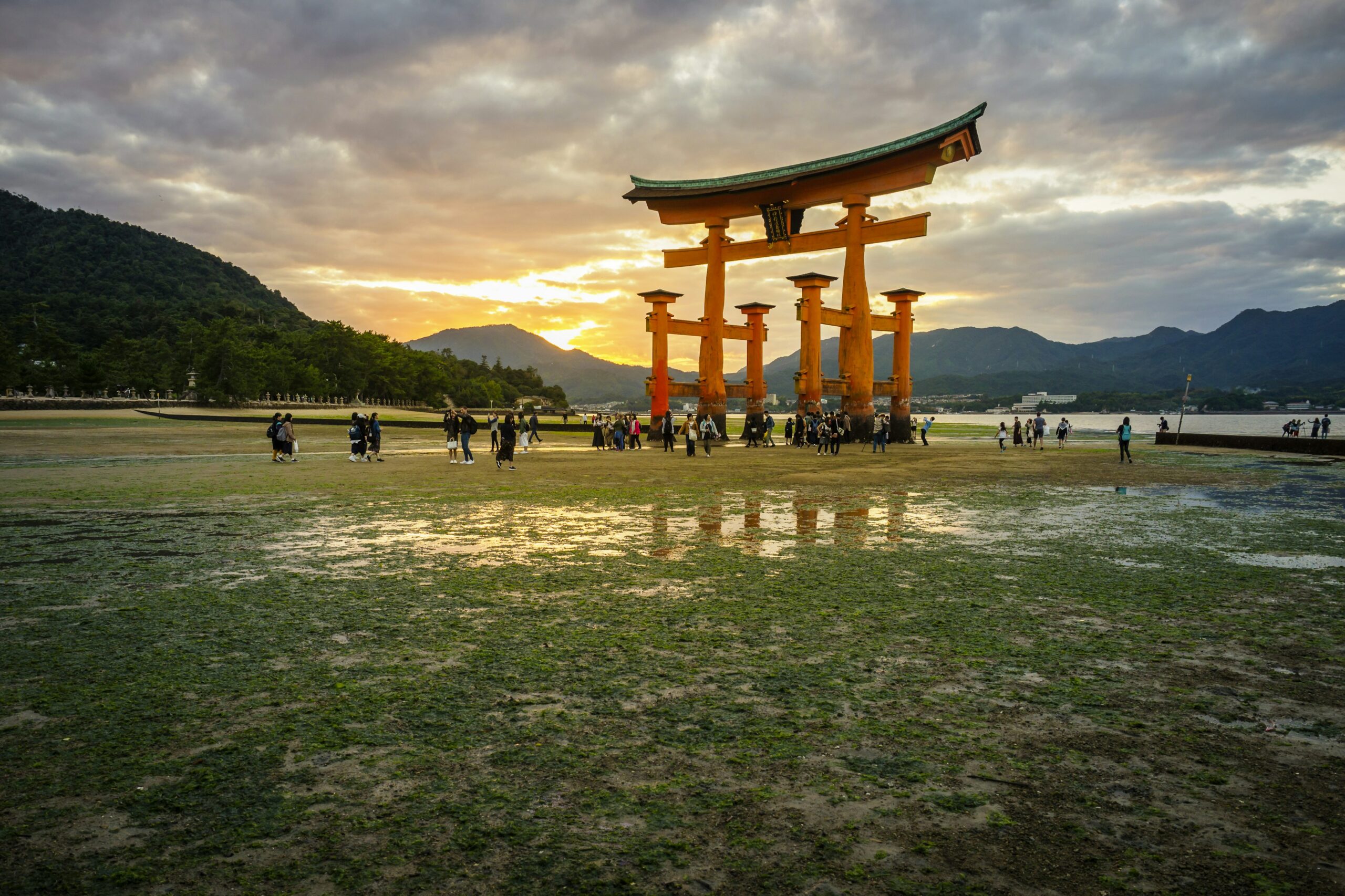
The JR West Kansai-Hiroshima Area Pass includes the JR West Miyajima Ferry, though a small Miyajima visitor tax applies when boarding the ferry.
You can visit Miyajima as a day trip from Hiroshima, but staying overnight on the island is special. After the crowds leave, the atmosphere becomes much quieter and more atmospheric.
Day 14: Return to Tokyo
Unless your flight leaves very late, I recommend returning to Tokyo one day before departure.
This makes the end of the trip much less stressful.
Long-distance train delays are rare in Japan, but they can happen. Weather, accidents, luggage problems or simple exhaustion can also make a same-day transfer to the airport more stressful than expected.
Use this final Tokyo evening for:
- last souvenir shopping;
- a restaurant you missed at the beginning;
- a relaxed walk in Ginza, Shinjuku, Ueno or Shibuya;
- packing without rushing.
For the final night, I recommend staying somewhere practical rather than romantic.
Good final-night areas:
- Tokyo Station;
- Ginza;
- Ueno;
- Shinagawa;
- Hamamatsucho, especially for Haneda access.
Suggested affiliate links:
Day 15: Departure From Japan
Your final day depends on your flight time.
If your flight is in the morning, go directly to the airport.
If your flight is in the evening, keep the plan simple:
- leave your luggage at the hotel;
- do last-minute shopping;
- eat one final proper meal;
- head to the airport with plenty of time.
Do not plan a major day trip on departure day. It is not worth the stress.
Read also // How Much Does a Trip to Japan Cost?
Is This 15-Day Japan Itinerary Too Fast?
This itinerary is busy, but realistic.
It gives you:
- 5 nights in Tokyo;
- 6 nights in Kyoto;
- 1–2 nights in Hiroshima or Miyajima;
- 1 final night in Tokyo.
That is a good balance for a first trip.
What I would not add to this exact itinerary:
- Hakone;
- Kanazawa;
- Takayama;
- Koyasan;
- Nikko;
- Naoshima;
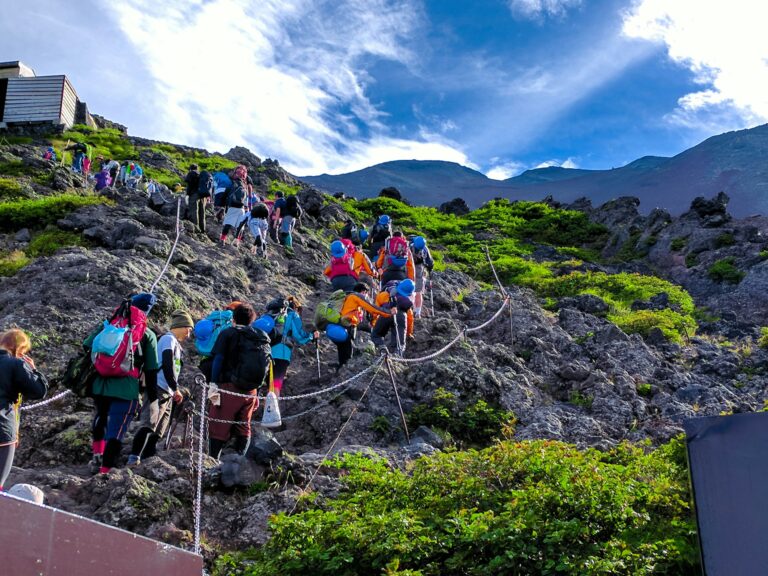
- extra Mount Fuji nights.
Those places are wonderful, but adding them without removing something else will make the trip too rushed.
If you want a more relaxed version, remove Hiroshima and Miyajima and spend more time in Tokyo, Kyoto and Osaka.
If you want a more adventurous version, replace Hiroshima with Kanazawa and Takayama, or add Hakone between Tokyo and Kyoto.
Planning a Japan trip and not sure what to remove?
I design realistic custom Japan itineraries based on your travel dates, pace, interests and budget, so you do not waste your trip running from one place to another.
Best Add-Ons for This Itinerary
If you have more than 15 days, these are the best additions.
Option 1: Hakone or Kawaguchiko
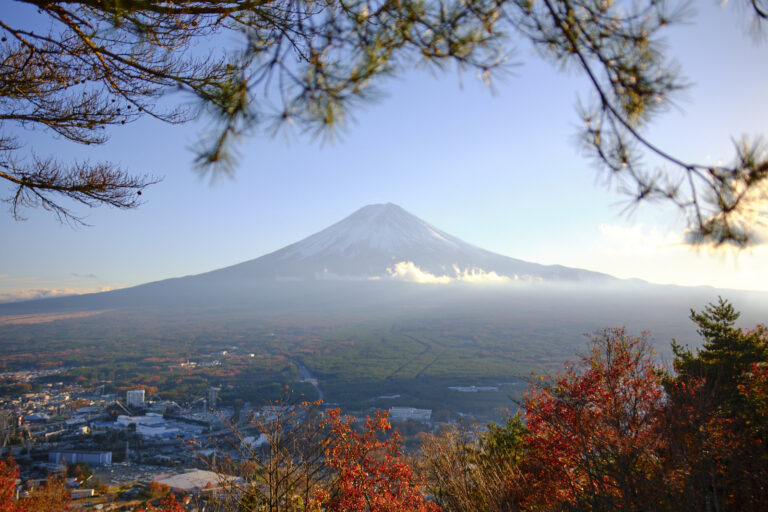
Best for Mount Fuji views, ryokan, onsen and a slower break between Tokyo and Kyoto.
Ryokan with private onsen near Mount Fuji
Option 2: Koyasan
Best for temple stays, Buddhist atmosphere and mountain scenery.
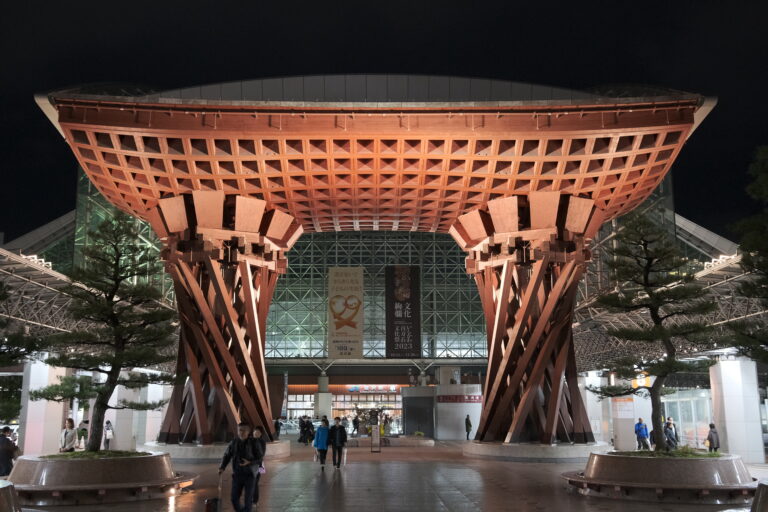
Option 3: Kanazawa
Best for gardens, samurai districts, geisha districts and a more refined historical city.
Read also // Kanazawa Itinerary: For Half-Day, 2-Day, and 3-Day Trips
Option 4: Takayama and Shirakawa-go
Best for traditional mountain towns, old merchant streets and rural scenery.
Takayama and Shirakawa-go tour from Kanazawa
FAQ: 15-Day Japan Itinerary
Is 15 days enough for Japan?
Yes. Fifteen days is a very good amount of time for a first trip to Japan. You will not see everything, but you can comfortably visit Tokyo, Kyoto, Osaka, Nara, Hiroshima and Miyajima with good planning.
Should I stay in Osaka or Kyoto?
For this itinerary, I recommend staying mostly in Kyoto and visiting Osaka as a day trip. Kyoto has a stronger traditional atmosphere, while Osaka is easy to reach by train. If nightlife and food are your main priorities, you can stay one night in Osaka.
Is Hiroshima worth it on a first trip to Japan?
Yes, if you have at least two weeks. Hiroshima and Miyajima add historical depth and natural beauty to the classic Tokyo-Kyoto-Osaka route. If you only have 10–12 days, I would probably save Hiroshima for another trip.
Should I buy a 14-day Japan Rail Pass?
Not automatically. With current prices, the 14-day JR Pass is often not worth it for this route. Compare individual train tickets, a 7-day JR Pass, and regional passes such as the JR West Kansai-Hiroshima Area Pass before buying.
Is this itinerary good for families?
Yes, but families should slow it down slightly. I would reduce the number of temples, add more breaks, and consider staying near major stations to make transport easier.
Is this itinerary good for couples?
Yes. For couples, I would add one special stay, such as a ryokan with private onsen in Hakone, Kawaguchiko, Kinosaki or Miyajima. You can replace one Tokyo or Kyoto night to make room for it.
Can I do this itinerary without speaking Japanese?
Yes. This route is very suitable for first-time visitors and is well connected by trains. You should still prepare essential apps, a translation app, an eSIM, and a realistic transport plan.
Final Thoughts: The Best 15-Day Japan Itinerary for First-Time Visitors
A 15-day trip is one of the best ways to experience Japan for the first time.
It gives you enough time to enjoy Tokyo’s energy, Kyoto’s traditional atmosphere, Osaka’s food culture, Nara’s history, Hiroshima’s emotional depth and Miyajima’s beauty.
The key is not to add too much.
Japan rewards slow attention. Some of your best memories may come from a quiet side street, a small restaurant, a temple garden, a train ride, or an evening walk back to your hotel.
Use this itinerary as a strong foundation, but adapt it to your travel style.
If you love cities, spend more time in Tokyo and Osaka. If you love traditional culture, give Kyoto more breathing room. If you want a romantic or relaxing break, add a ryokan with private onsen. If you care about history, keep Hiroshima and Miyajima in the plan.
And above all, remember this: a good Japan itinerary is not the one with the most places. It is the one that lets you actually enjoy being there.
Need help turning this into a realistic trip for your dates, budget and travel style?
I create custom Japan itineraries with realistic timing, hotel area recommendations, transport guidance, day-by-day planning and practical booking links.
JAPAN TRAVEL COMPANION
Planning the rest of your Japan trip?
Add your travel dates and destinations to see what needs booking, when tickets open and what to plan next.